


Looking for something specific? Enter keywords to discover content, stories and experiences.
Close
April 30, 2026
Photo
Mathurin Vauthier and Johan Wildhagen
April 30, 2026
Photo
Mathurin Vauthier and Johan Wildhagen
Some seasons pass quietly. Others ask us to linger. Spring in the mountains is one of them—a shoulder season that marks the end of hibernation for some and the beginning of a long-awaited period for others. The days stretch out, lines too risky to attempt in winter finally open up, and the valley below exhales. In partnership with ORAGE, we sat down with two Chamonix locals who experience this season from the inside, each in their own way.
Ella Moracchioli and Christopher Baud share a common thread: childhoods spent on skis. Now both ORAGE ambassadors, their paths converge around a shared conviction: that the way we experience the mountains is shaped as much by human connection as by the terrain itself.
Ella first stepped away from the mountains to study international relations, before returning with a different intention; to create, to tell stories, to bring people together. Through BEDROCK, a project that is equal parts educational and creative, she frames a new way of inhabiting the mountains: as a space for practice, dialogue, and reflection all at once.
Christopher Baud became a certified mountain guide in 2014, stepping into a family legacy deeply rooted in the land. Following three generations of guides before him, the profession came naturally. Starting out as a ski instructor, he gradually expanded his practice into high mountain terrain, with an approach built on safety and human connection.


EM: In Chamonix, it means getting the sun back—in winter, the peaks are so high you lose it fast. Tourism slows down, but paradoxically, that's when the real ski season begins for many locals. Conditions stabilize, huts open, and the rhythm of the day shifts. You can ski into May, sometimes June.
CB: It's a striking contrast. The snow-covered peak in the background and the valley below slowly coming back to life. For most people, this marks the end of ski season but for us, it’s the beginning of the best part. There’s less wind, the snow adheres better to slopes and rock faces, opening up certain zones that aren't accessible in the winter. Avalanche risk is easier to read as long as you anticipate sun exposure and the way the snowpack warms through the day. Conditions evolve quickly in the spring so you have to stay attentive and responsive.
CB: Seasonal transitions are full of lessons, particularly when you've had the chance to observe the terrain evolve over time. Nature moves fast. Every season, the mountain has something to give if you're willing to slow down and pay attention.
EM: The sheer scale of it. The aiguilles, the glaciers… everything feels vast, yet still accessible. In spring, I love spending time in the Argentière Basin and sleeping at the refuge up there.
CB: What sets Chamonix apart is access to truly exceptional terrain. And thanks to the iconic Aiguille du Midi cable car—"Mama Midi," as the locals call it—you can be at high altitude in minutes. That opens up north-facing descents on steep, exposed terrain that's unreachable earlier in the season, with routes toward Mont Blanc and other 4,000-meter summits.

EM: It’s a complex relationship. At the start of every winter, I feel a bit of apprehension. High mountains still intimidate me, but they also draw me in.
I've lost two people to me in the mountains. For a while, going back was hard because the mountains carried that grief. But I also came to understand that I needed them in order to move past it.
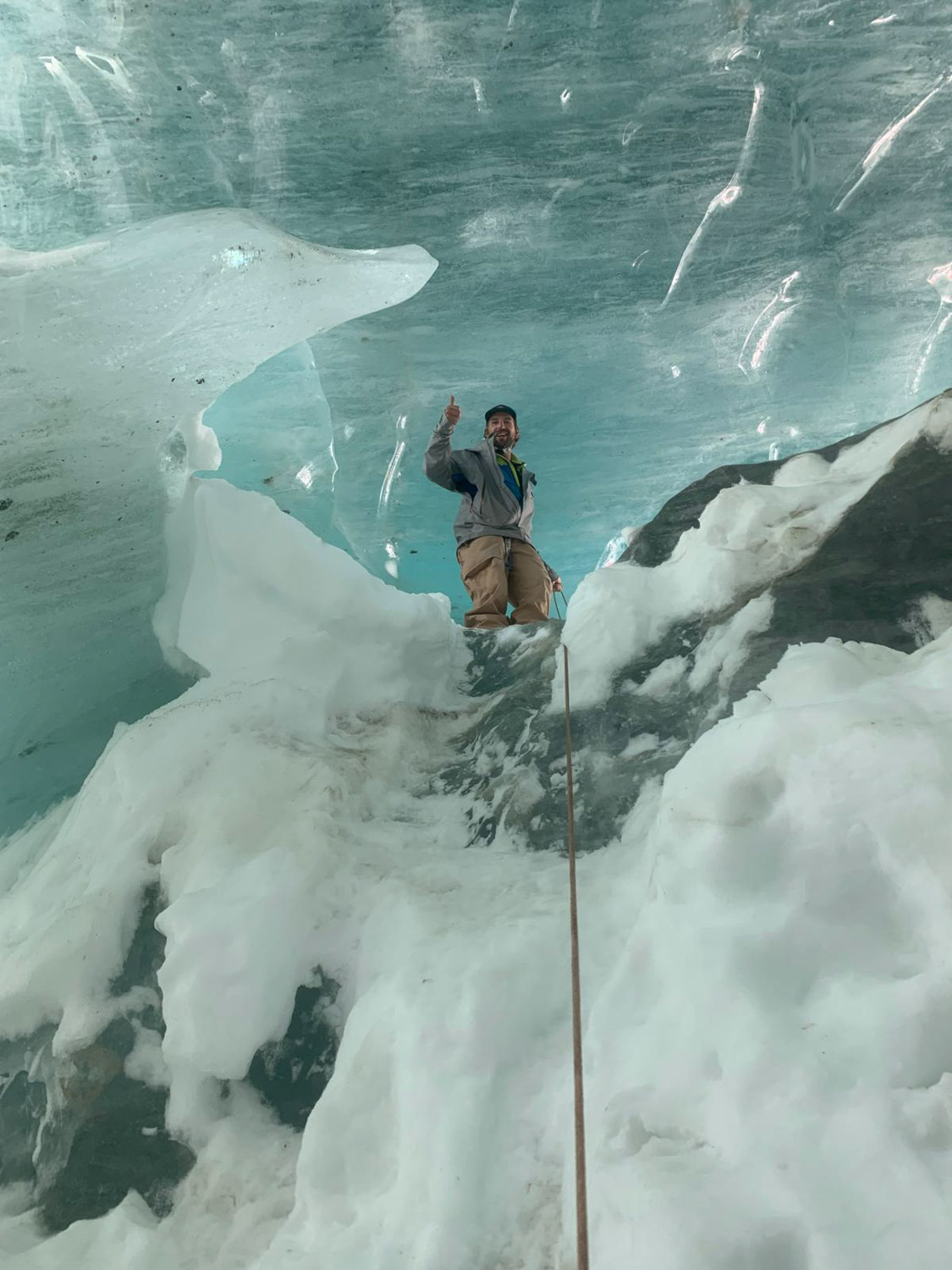
CB: Having grown up in the Mont Blanc massif, I've always observed the mountains and glaciers from the valley. I've spent my life climbing, skiing, and hiking these mountains and for the past twenty years or so, I’ve also spent summers searching for quartz and pink or red fluorite crystals. So I've witnessed the transformation of the landscape, and over time I've developed an increasingly attentive eye for the impact of climate change… the retreating glaciers, the growing number of rockfalls triggered by thawing permafrost. These thousand-year-old ice deposits, locked into granite walls, weaken the mountain as they melt. But they also reveal new rock faces, and sometimes new crystals for those who know where to look.
Nothing is ever entirely black or white; sometimes you have to learn to appreciate nuance. When I see these granite formations (among the hardest rocks on earth), destabilized by water and ice; when I watch those immense glaciers shrink year by year, I feel small. Humbled. But for me, the lesson the mountain teaches is learning to adapt.

EM: A healthier, more accessible, more conscious mountain culture. With BEDROCK, we create spaces where people can ask questions, share experiences, talk openly about risk and doubt. Because everyone has a different relationship with risk, the idea is to find a middle ground: to learn, to understand, to evolve within a more balanced culture. That means sharing knowledge, but also sharing the stories of different people and different paths. Stepping outside the singular, dominant vision of the mountains to make room for everything that surrounds the act itself: the preparation, the inevitable doubt the night before, the kind of realness that surfaces in a hut.
CB: As a guide, my first responsibility is keeping everyone safe, but it's also about sharing my love of the mountains and my knowledge that lets people move through this very singular environment with confidence. There's a real psychological dimension to the work in finding the balance between the desire to push further and managing the risk. It’s about constantly adapting to the terrain, the conditions, and the people you're with, to create moments that last.
EM: With ORAGE, there's always been genuine attention to local culture and not just to products. They've managed to put down real roots in the valley and bring people together. They were among the first brands to believe in BEDROCK, and there's a natural alignment in values that pushes us to create formats that actually mean something, and that reflect what people here are really living.
CB: For me, the ORAGE community represents skiing in all its forms—freestyle, freeride, touring, high alpine, resort… Everyone shares the same passion, the same love for the mountains and the natural world.
Snow is both a complex and magical element. It brings us together in a way few things do. It holds friendships, memories, and emotions from childhood onward. It’s a family, really.
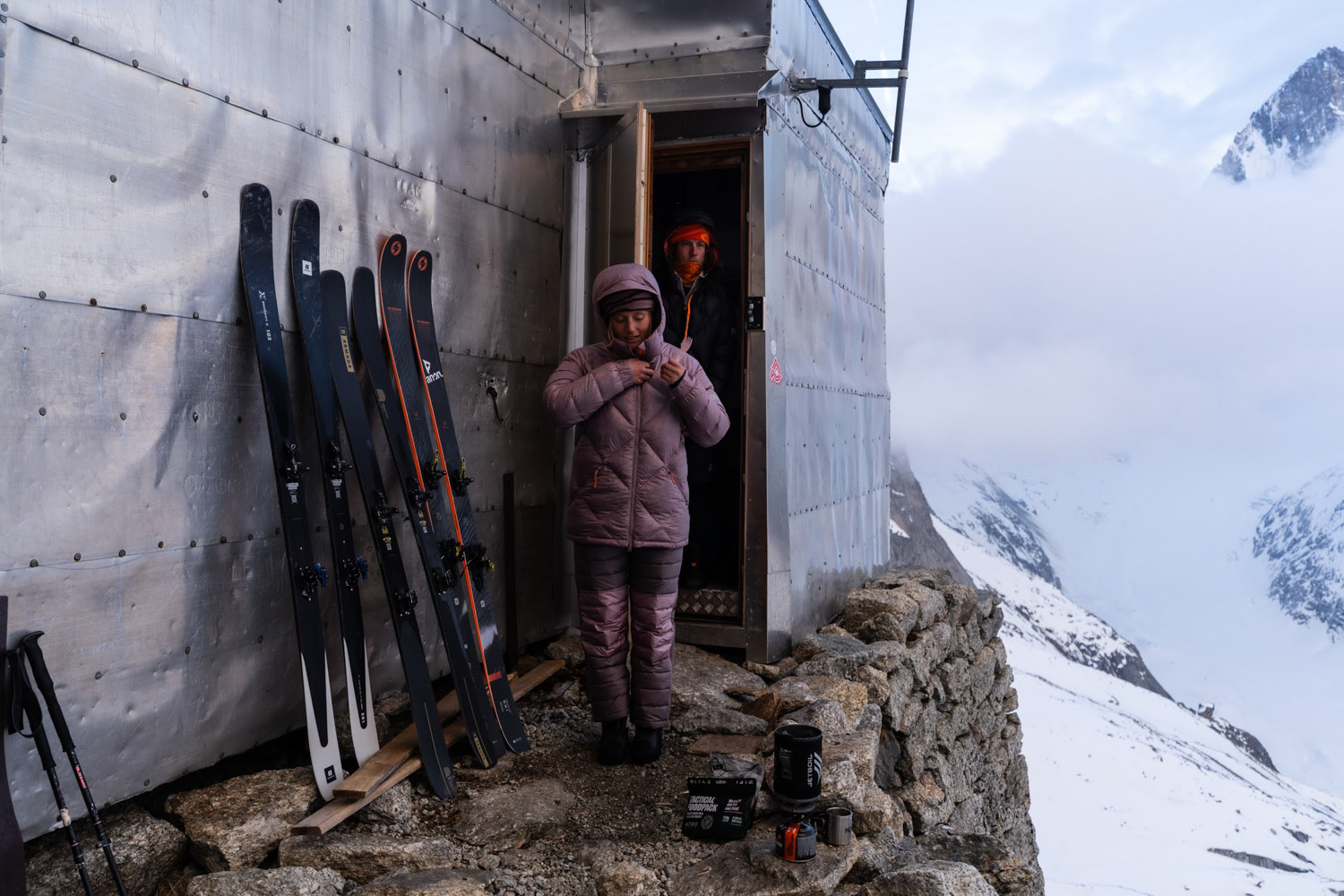
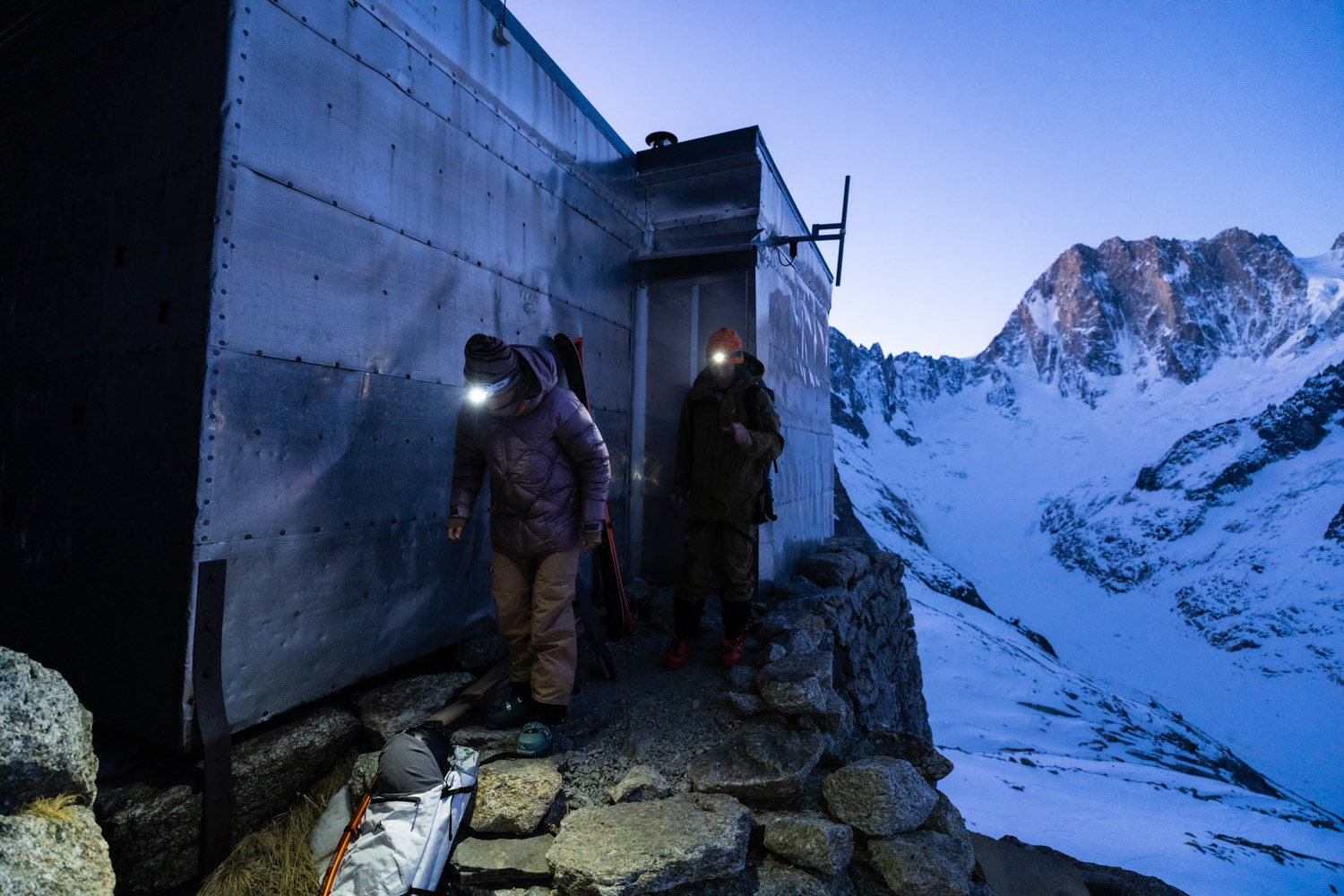
Ella Moracchioli recalls one of her last spring outings with friends. After a night spent in a hut in the Argentière Basin, they rose before dawn, crossed the glacier and skied down in the spring sun, ending the day at Les Grands Montets over a spritz. Those moments feel suspended in time, and stay with you long after the snow is gone.
A few weeks later, in June 2024, Christopher opened a new line on the north face of the Aiguille du Midi, a variation of the Frendo Spur he had been watching for years, waiting for the conditions that only spring can offer. The descent, suspended somewhere between winter and summer, carries on a long family tradition—following in the tracks of the Mallory Porter, opened by his father Anselme Baud in 1977——and becomes a quiet tribute to his brother Édouard, who passed in the mountains twenty years earlier, and to his friend Tof Henry, in 2023.
Throughout these exchanges, a shared idea emerges: the mountains are not defined solely by practice or performance. They are lived through connection—to others, to the land, and to time itself. Whether by creating spaces for dialogue or tracing new lines down untouched faces, Ella and Christopher are part of a living culture, one that evolves as much as it shapes those who engage with it.





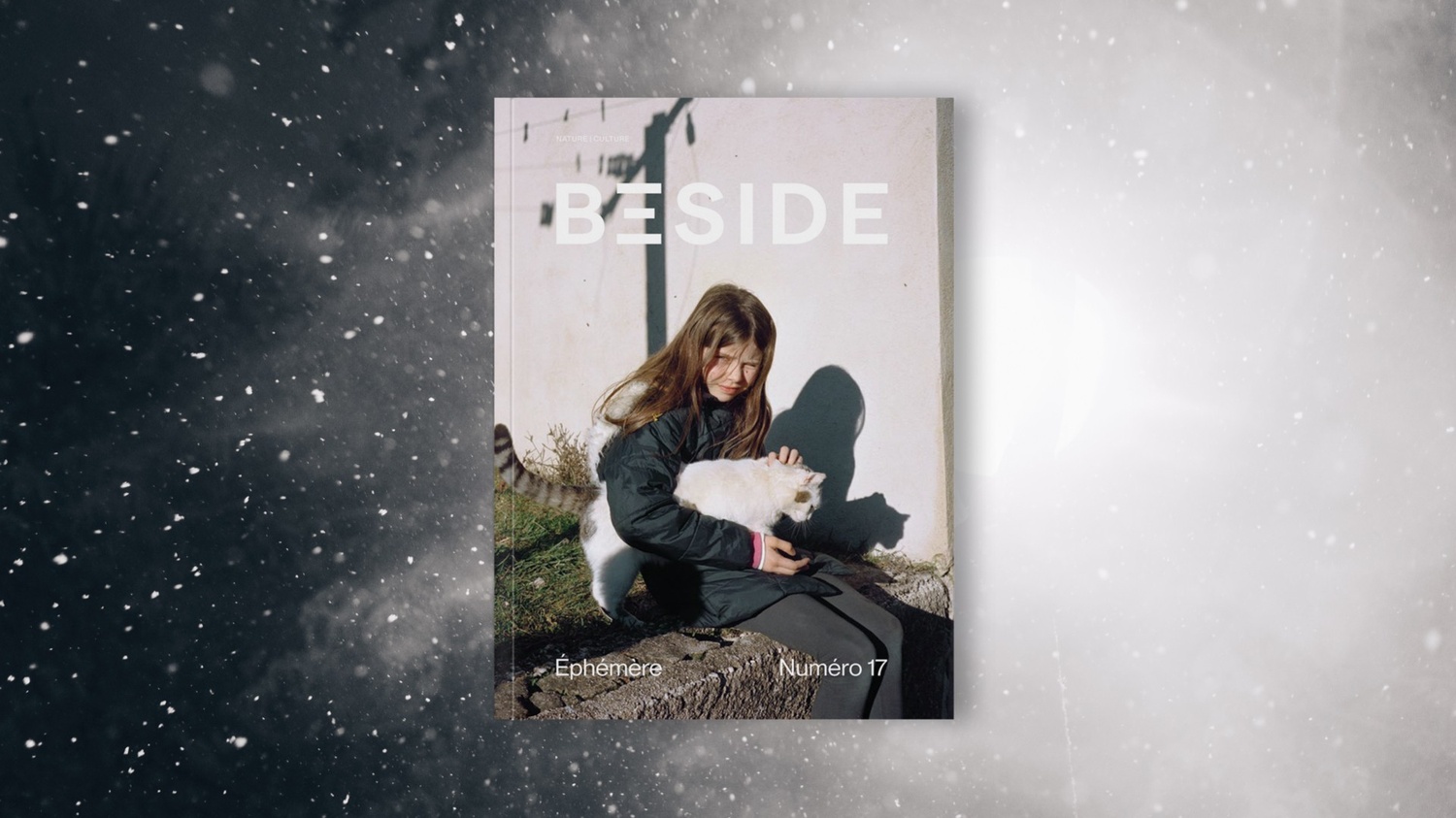




NEW ISSUE nº17






.jpg)
.png)
