


Looking for something specific? Enter keywords to discover content, stories and experiences.
Close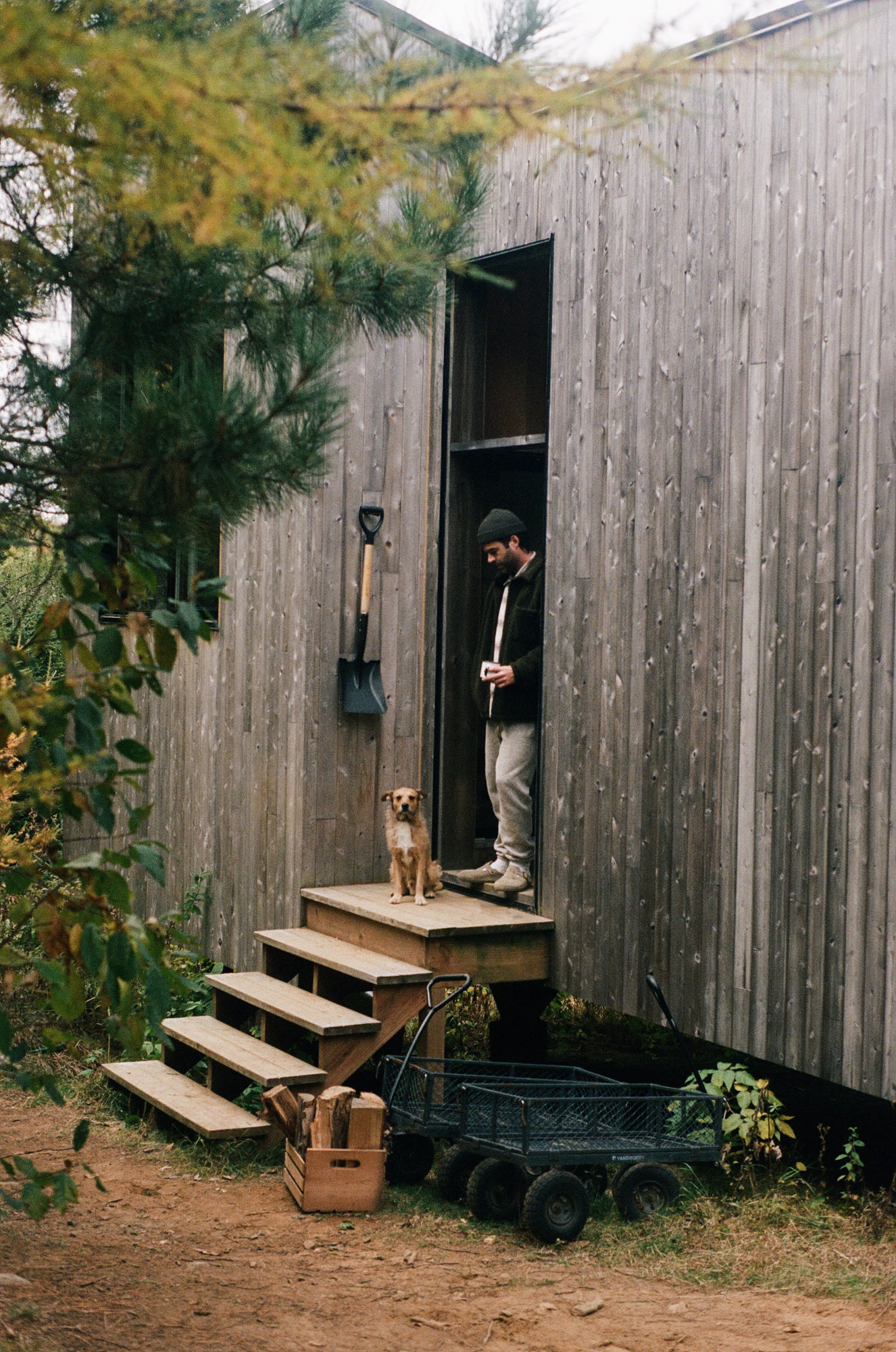
April 9, 2026
Photo
Alex Dozois
April 9, 2026
Photo
Alex Dozois
There's a non-linearity to Geoffroy’s path that works as a through line. A trajectory shaped by detours, gut feelings, repeated departures and returns to Montreal. Each trip, each encounter feeds an insatiable creative drive — a curiosity that has never quite settled.
In recent years, most of these creative stopovers have gravitated toward Mexico, whether to draw inspiration, record, or perform, as he did last December at Festival Tropico. These stays blur together without ever resembling one another, leaving their mark on his music, each time a little more. In Mexico City, Geoffroy finds a momentum he can't quite name — a lightness too real to ignore. He also finds Sean Fisher (French Braids), a Toronto-based producer he first crossed paths with in the Magdalen Islands a few years back. From Fisher's studio in Mexico, the two let a new album unfold on its own terms, carried by the present moment. "We start with the instrumental, then come the lyrics — pulled from a memory or echoes of the night before."

"Stories unfold differently there," he says. "There's something about Mexico City… a kind of ego-free energy, a genuine desire to collaborate." He surrounds himself with local musicians, lets ideas move more freely, lets songs shift and change form. For Geoffroy, making music is less about control than about letting go. His previous album, Good Boy, already bore the marks of that openness — vintage records found on a street corner, cumbia, organic textures. On this new project, he writes in Spanish for the first time, as if the language itself offered a different way of telling stories. Less direct. More fluid.
Out of these trips, a fifth album is taking shape: about a dozen demos he'll finalize on his next visit to Mexico, set to find their way to us sometime this year.
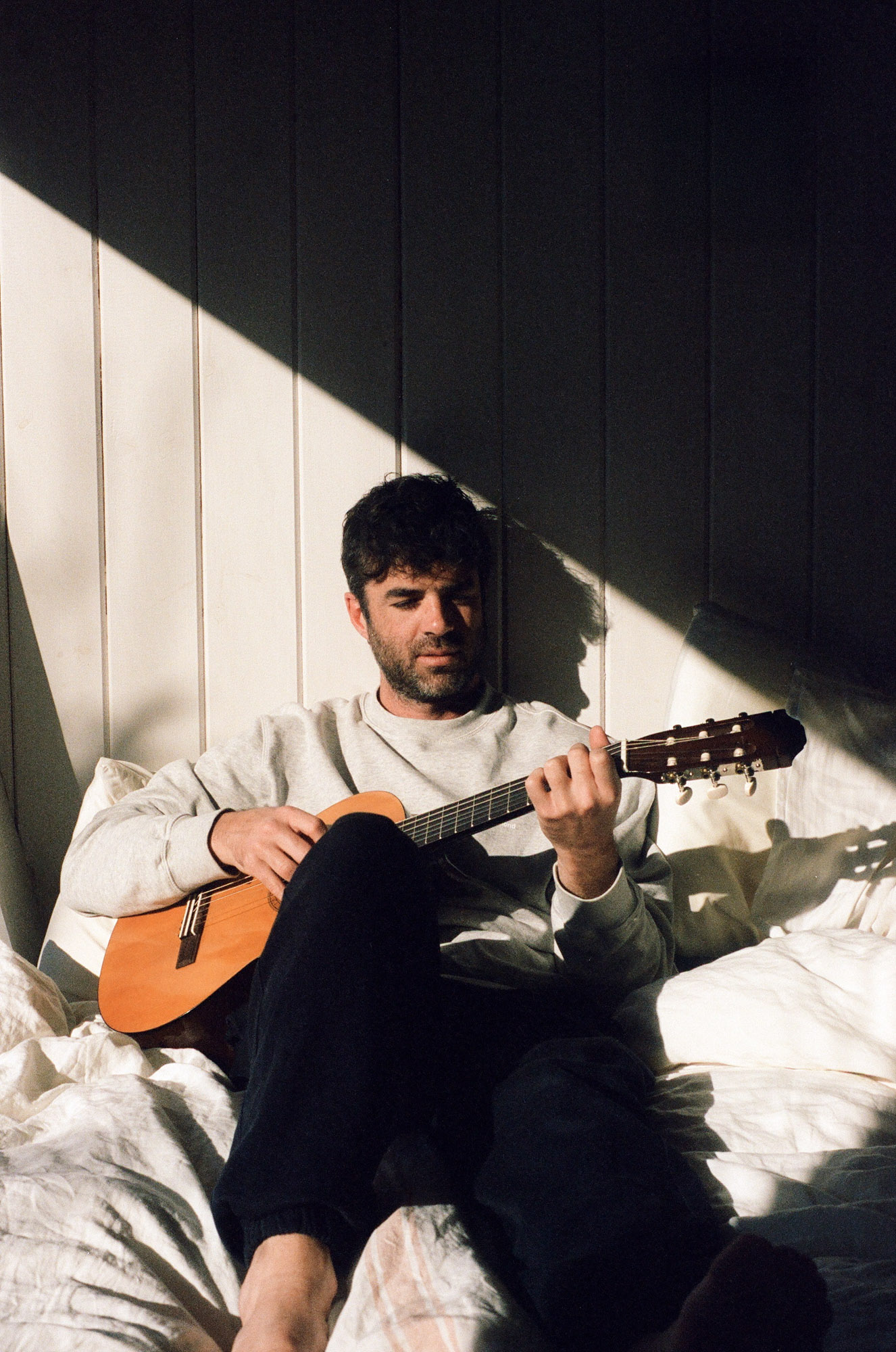
Montreal has always remained an anchor, no matter how far he roams. Geoffroy grew up in NDG, in a cozy house, where his parents were quickly subjected to endless listens of Blink-182. At 11, he asks for an electric guitar. His father gave in, figuring it would be quieter than a drum kit—something he would also eventually cave on a few years later. With friends, they form an emo punk rock garage band. Even then, as a teenager, instinct is what was leading the way. Geoffroy has never learned to read music. "I’ve always just felt my way through it”, he says.
For years, he wondered whether he should have formally studied music. Today, he finds something valuable in that very gap — a naivety and an intuition that leave room for exploration, for the kind of unexpected detours that lead somewhere interesting.
There’s a kind of freedom in not knowing—and an honesty, too, in trusting instinct over convention. It’s that instinct that eventually leads him elsewhere, into a friend’s studio who invites him to start producing music.
There's a real freedom in not knowing. And a certain honesty, too, in trusting instinct over convention. It's that same instinct that eventually leads him into a friend's studio, invited to make music for real. "Because you never really know if you're any good when you're singing alone in your basement," he says, laughing. That's where he understands that music can be something more than a hobby.




Growing up in Quebec also means learning to navigate between languages. At home, French was non-negotiable — slip an anglicism at the dinner table and you'd hear about it. Outside, English came fast, carried mostly by music. "Like most kids, I naturally gravitated toward English through music", he recounts.
He understood early on that he was growing up in a space where both languages coexisted. Writing and singing in English was never a political statement — more the natural outcome of his influences and his wandering. "My first CDs were Dr. Dre — The Chronic, No Doubt — Tragic Kingdom, and the Backstreet Boys. Not because I was turning my back on Quebec culture. Just because I thought it was good," he recalls. He mentions Björk, who made a similar choice: to open herself up to the world, to become a kind of universal figure, to write in a language that gave her a different kind of freedom. For Geoffroy, music isn’t meant to carry the weight of identity politics or linguistic debates. Both languages are simply part of who he is — on stage, in the studio, and around a dinner table.

What drives him, at the end of the day, is a pretty straightforward belief: good music is music that makes you feel something. "I just want people to feel something. If you manage to make the listener feel anything at all, you've done your job." No manifesto, no high concept — just the idea of living fully enough to have something worth writing about. "I don't want to feel like an impostor. What I write, I have to feel first," he says. So he stays open. He says yes. His songs are born from encounters, from love, from things observed in passing. From the right yes at the right moment. From a detour willingly taken.
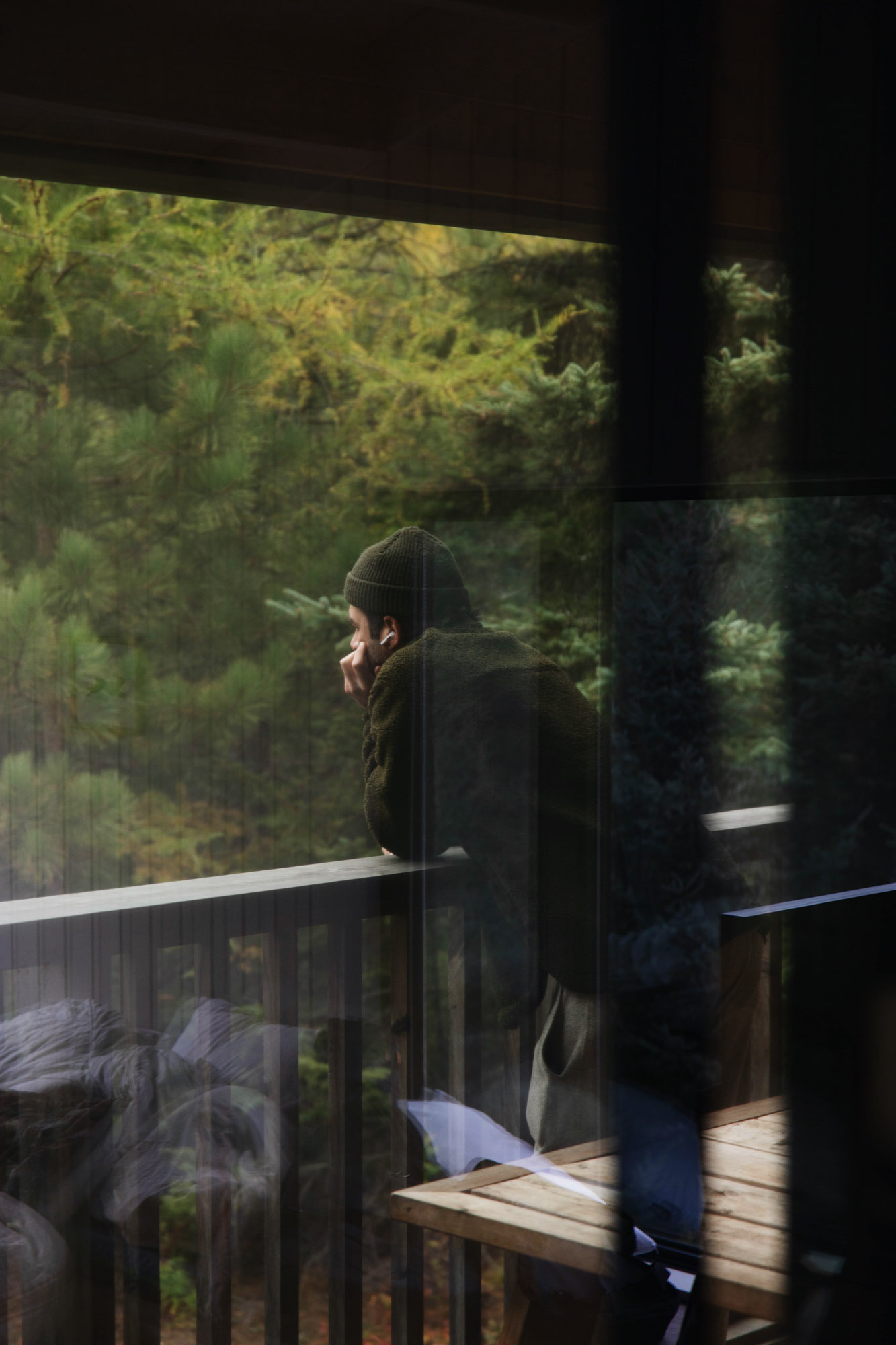
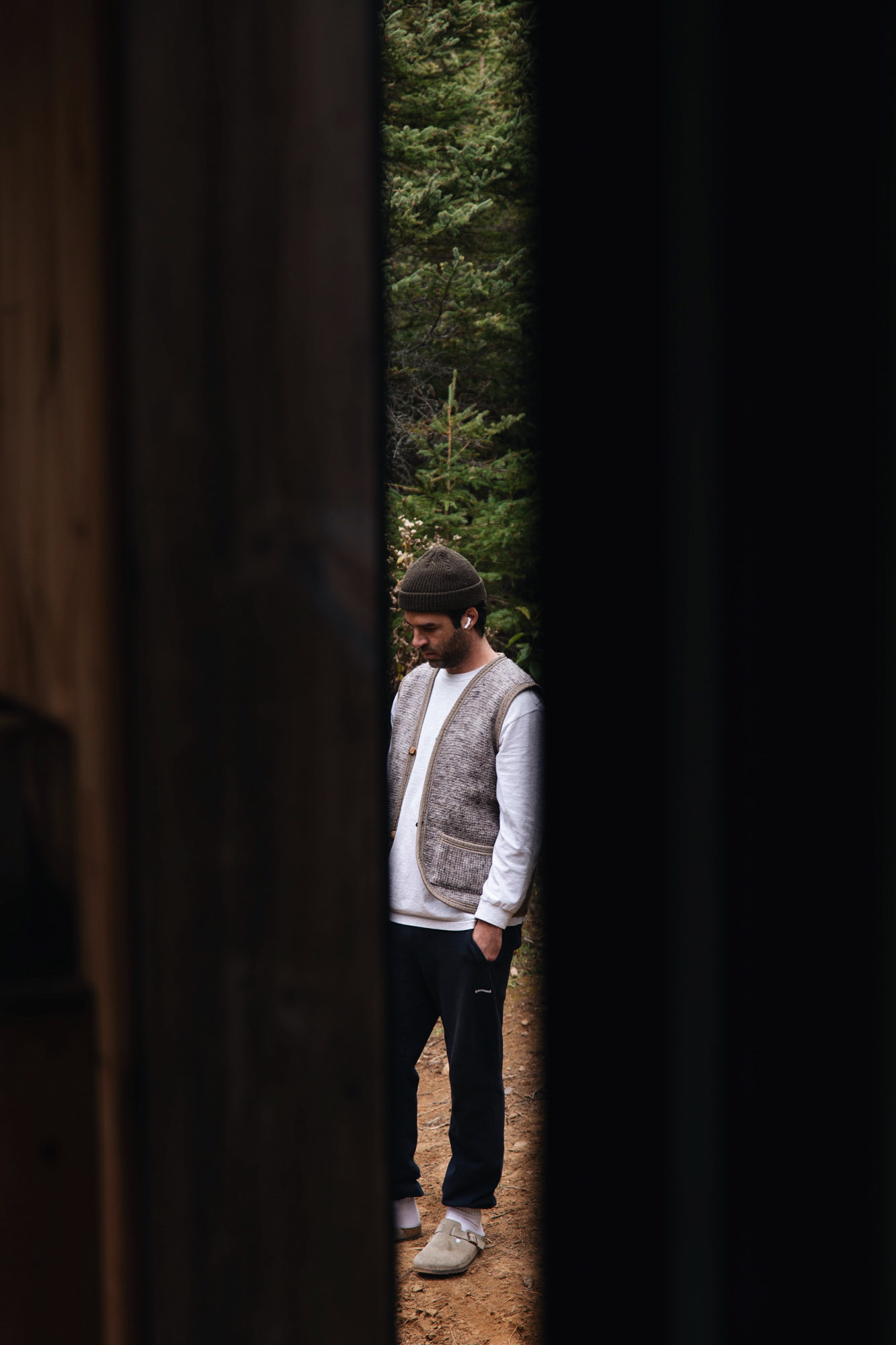
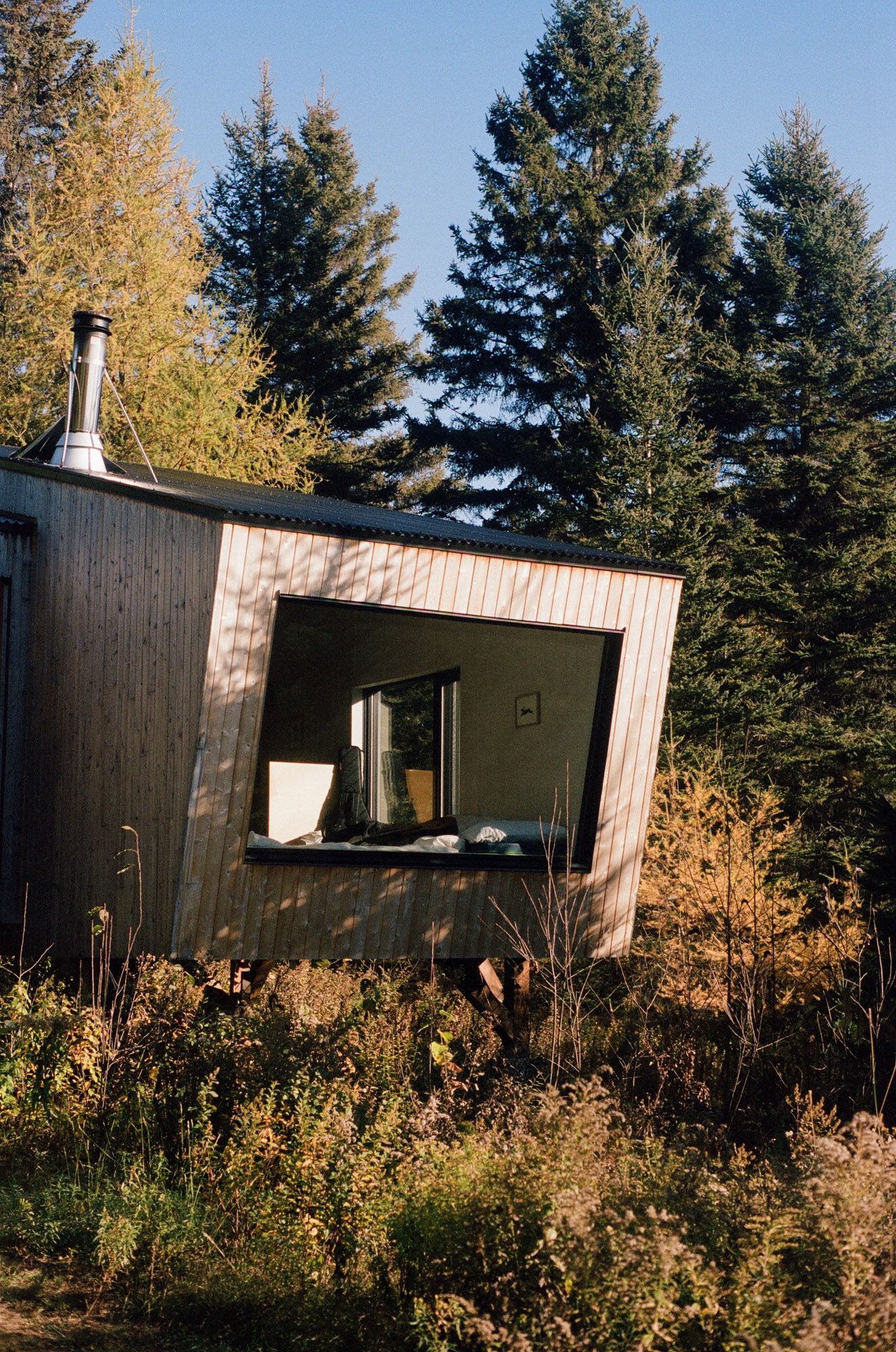
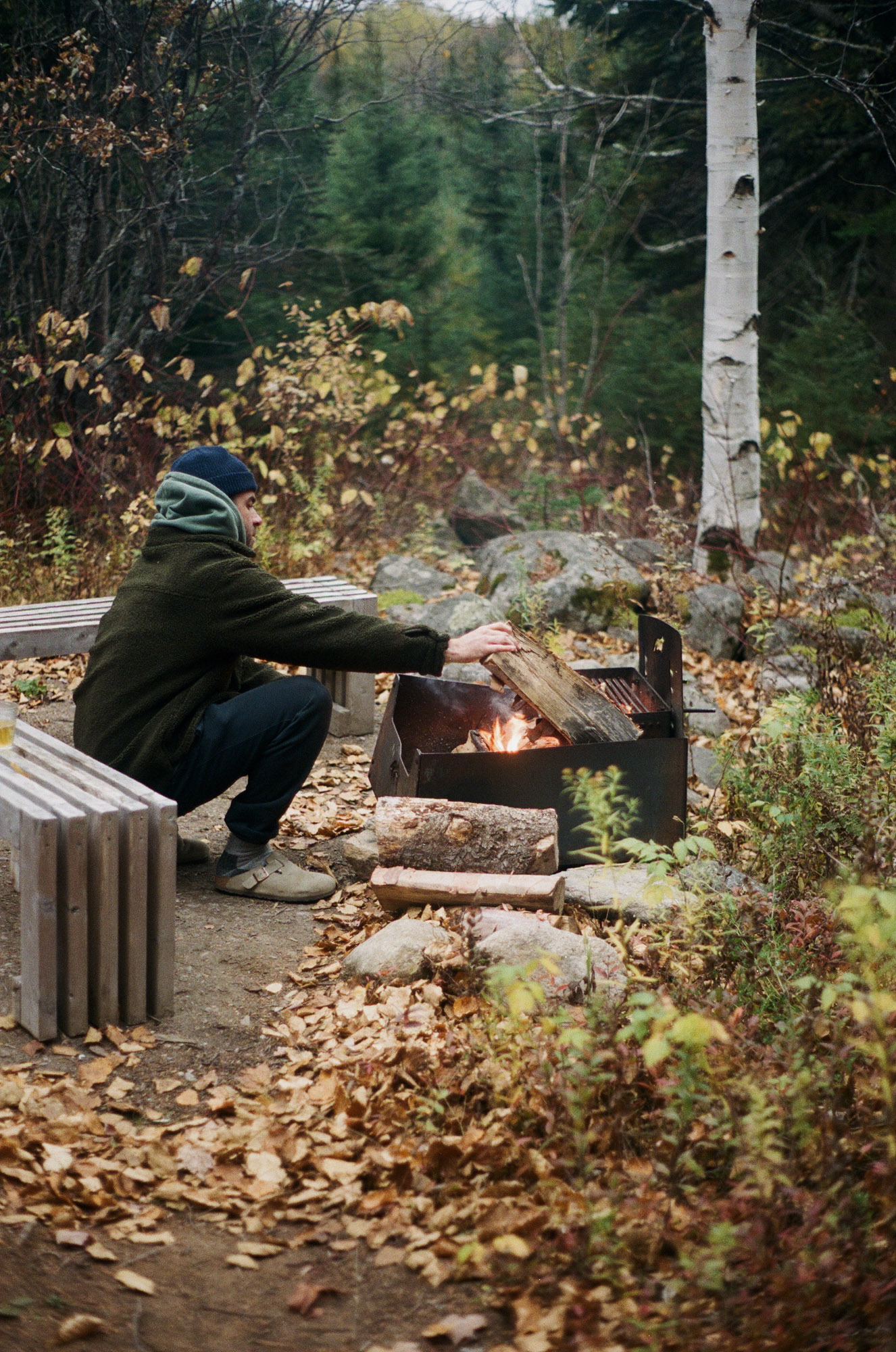
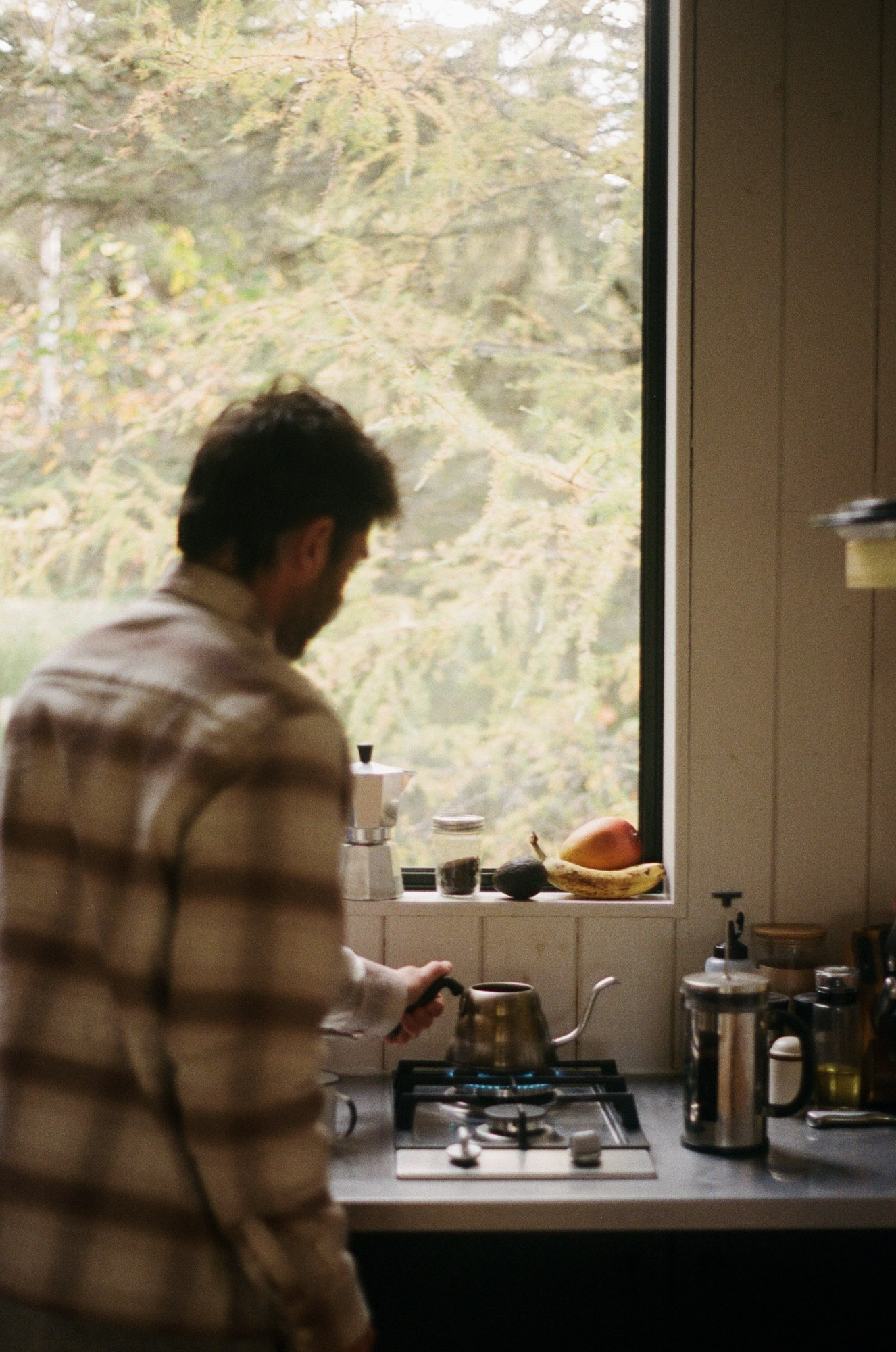
Whenever he can, Geoffroy escapes into the woods — to build a fire, play guitar, or simply surrender to silence. His stay at Territoire Charlevoix embodies that kind of reset. Tucked into a small refuge perched on a mountainside, time slows, the horizon stretches, and ideas sometimes find their way in. It’s there, close to nature and far from distractions, that he likes to finish his projects, or at least bring them as far along as he can outside of the studio.
The rest of the time, he rents a cabin in Mauricie—a place he can retreat to whenever he needs to leave the city. “That’s where I work as often as I can,” he says. As if, sometimes, it takes a forest, a lake, or a river for things to start moving again—for the music to follow suit.
Throughout Geoffroy’s career, despite the wide range of influences he absorbs along the way—from Tuareg music of the ’50s to Bon Iver and Paul Simon—through shifts in language, unexpected collaborations, travel, and evolving genres, one thing has remained constant: movement. Songs that don’t follow a straight line, but refuse to repeat themselves.

Every Skinshape album
Everything Bon Iver has ever made
Haïti Direct Compilation (an absolute goldmine)





NEW ISSUE nº17









.jpg)
.png)
