


Looking for something specific? Enter keywords to discover content, stories and experiences.
Close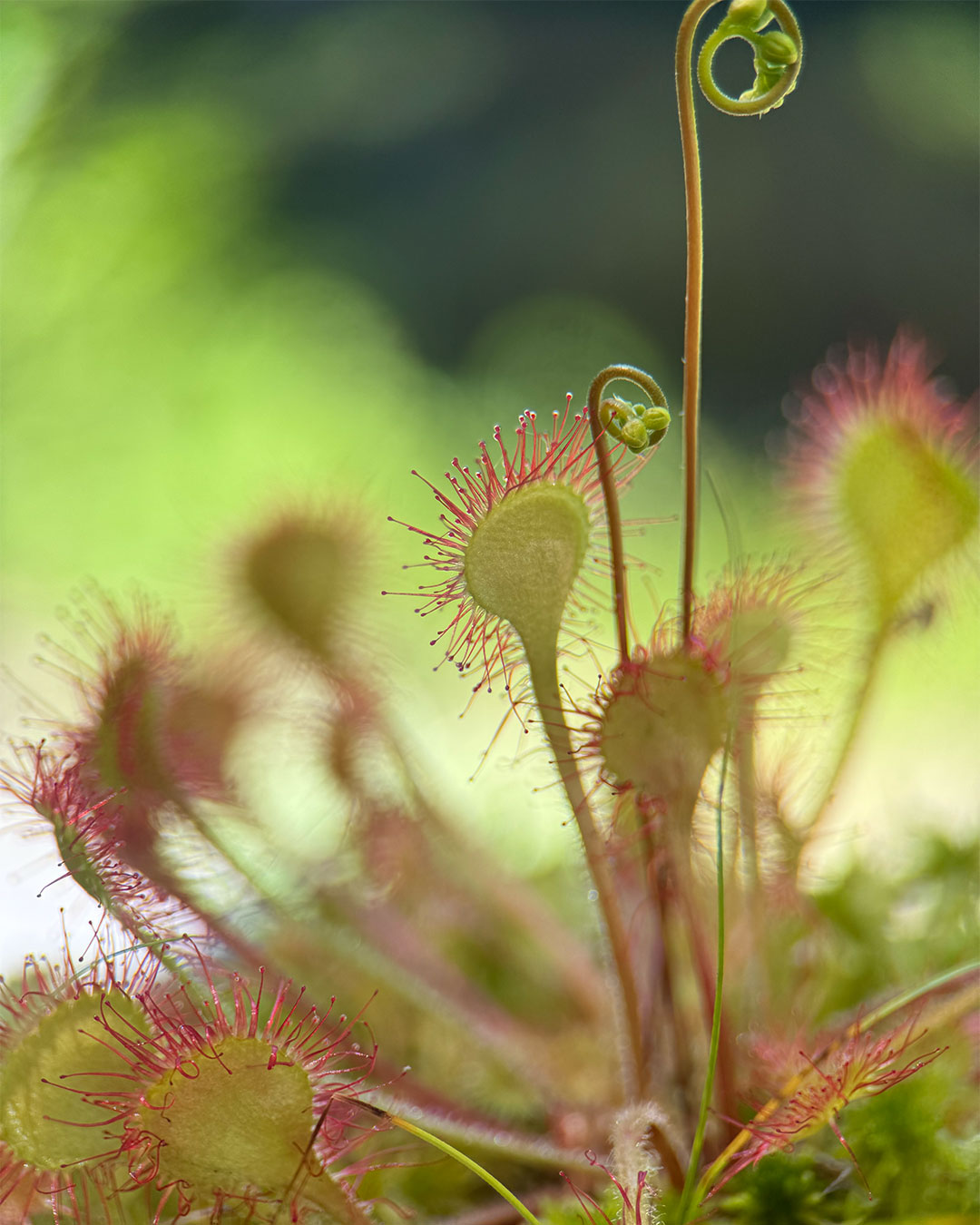
April 10, 2026
Photo
Chloé Savard
April 10, 2026
Photo
Chloé Savard
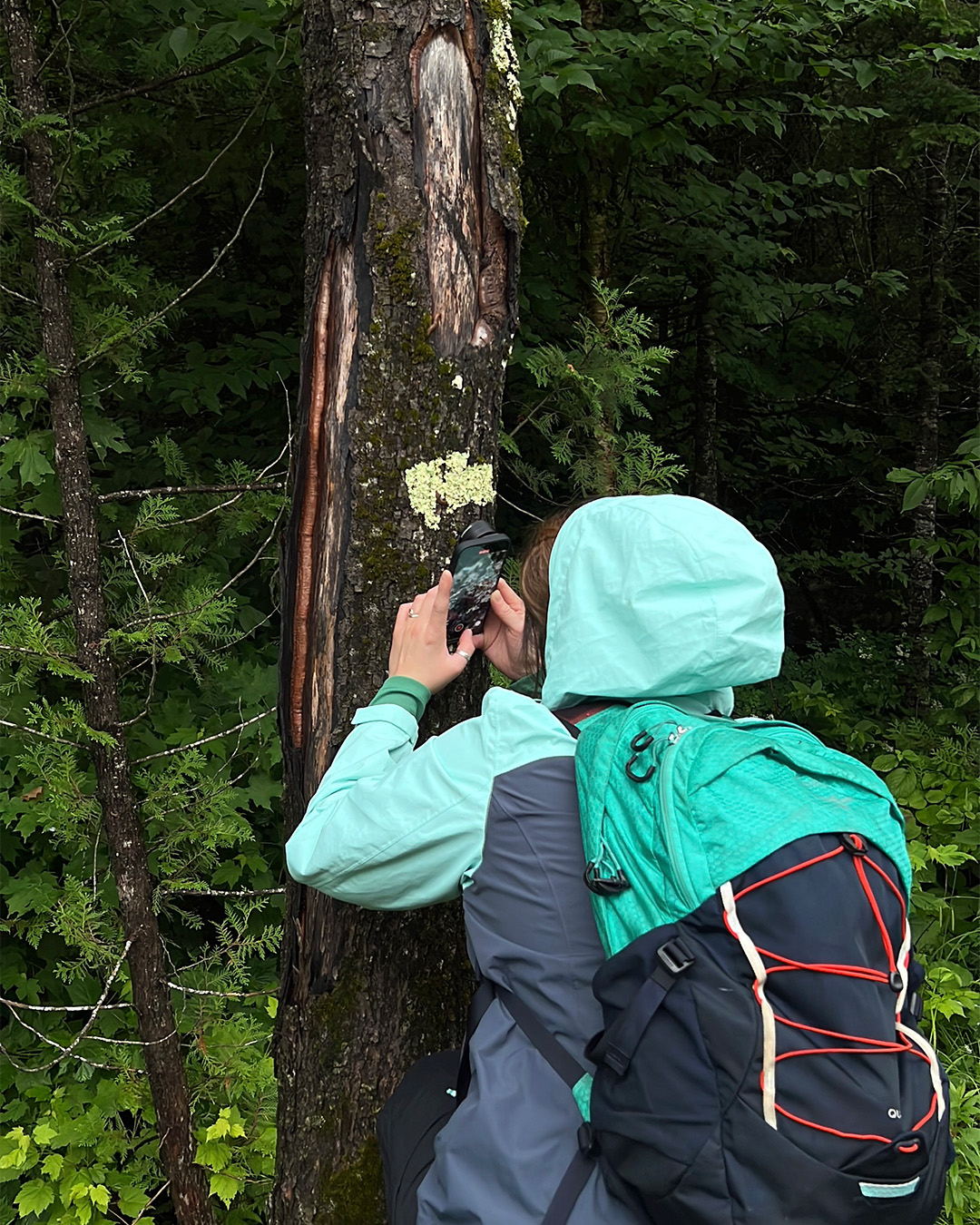
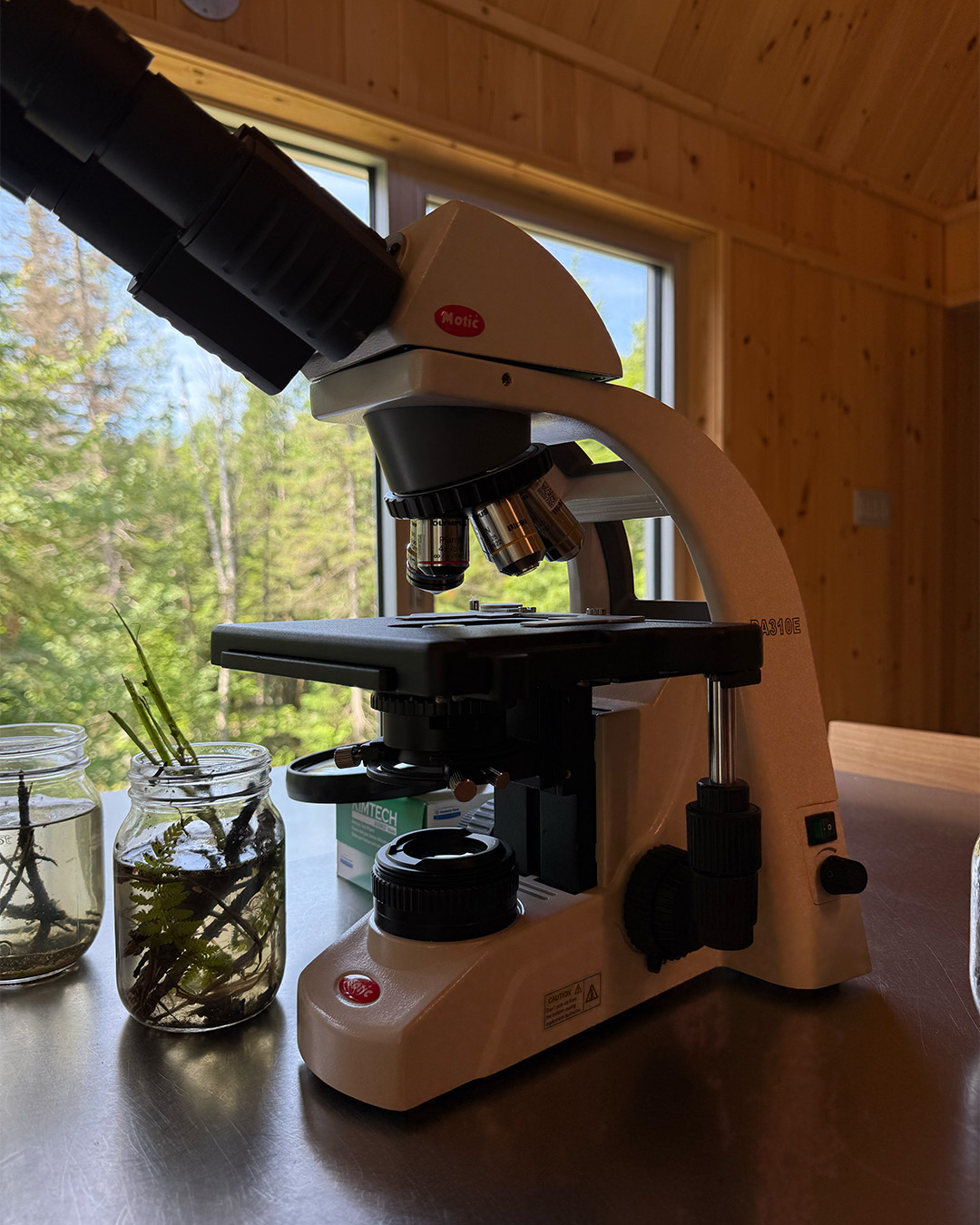
Last June, Chloé Savard, also known as Tardibabe, set foot on the BESIDE Habitat grounds for the very first time. She arrived with a sprained ankle and a clear intention: to discover what lives there. With a microscope in her backpack, a brace on her leg, and a macro lens clipped to her phone, she set out to explore the invisible world around the ponds. It did not take long before she found spiders, carnivorous plants, and, to her greatest delight, tardigrades.
Chloé is not just observing nature. She studies it closely, with a deep fascination for the microorganisms that inhabit our environments. Every sample collected from a pond and every microscopic image becomes a way for her to document a world that is invisible, yet essential. “I want everyone to see what I see. It feels strange to me that what appears under a microscope is still so unknown and sparks such strong reactions,” she explains.
Video caption translation: A tiny tardigrade
My favorite creatures, and the inspiration behind the name “tardibabe.”
Tardigrades are among the most resilient animals on Earth. Barely visible to the naked eye, measuring between 0.5 and 1.2 millimeters, they can survive conditions that very few living beings could endure. Extreme dehydration, the vacuum of space, radiation, intense heat and cold, even the crushing pressure of the deep sea.
These tiny water bears inspire me to stay strong in the face of adversity. They are also what first sparked my fascination with the microscopic world.
It has not been long since she first picked up a microscope, yet the microscopic world has already transformed the way she sees everything around her. “It changed me completely, and very quickly. I never thought I could be so amazed by what surrounds us. It’s funny because it’s everywhere, yet so few people seem to pay attention to it,” she says.
Video caption translation: A flatworm
You can find them almost everywhere, in both freshwater and saltwater environments. Some even have two tiny black eyes. They move using thousands of microscopic hair-like structures that beat in unison along their bodies, allowing them to glide smoothly through the water.
This desire to reveal the unseen and make science more accessible is what drives her to share her discoveries through visually rich and emotionally resonant videos. Through her work, she invites people to slow down and notice the complexity of the living world, but above all its beauty. “I just want people to see their environment and realize how incredible life on Earth really is. Sometimes we forget. We forget that what we are experiencing is, in a way, inexplicable and kind of magical,” she says.
Her connection to nature goes back to childhood. She grew up near the forest in Quinnville, surrounded by toads, moss, and snakes. “It’s always been part of me. But today I approach it differently. I want to create with nature and share everything I discover,” she explains.
Video caption translation: Euglena sanguinea and other euglenoids
These are single-celled organisms that move using a flagellum and produce their own energy through photosynthesis. Some species contain pigments that give them a red or orange color. These pigments, called carotenoids, are also found in foods like carrots.
What she loves most is encountering an organism she has never seen before. These moments push her to research, learn, and understand. She turns to books, scientific papers, encyclopedias, and a community of microscopists online. “Beyond identifying an organism and creating a video, I explain its ecological role and its story based on scientific literature that I reference,” she says.
Video caption translation: Drosera rotundifolia
Here, you can see a closer look at the glandular hairs of this carnivorous plant from the Droseraceae family. A sticky, viscous substance coats these delicate structures. It is this substance that attracts, traps, and digests insects.
In the sunlight, the droplets shimmer like morning dew, which is how the plant earned its names. Rossolis in French, sundew in English, and Drosera in Latin.
By blending art, science, and nature, Chloé invites us to look closer at the world around us, to notice what usually escapes our attention, and to celebrate the beauty of the invisible.
If her goal is to encourage people to slow down, pay attention, and reconnect with their surroundings, it seems she has succeeded. Today, more than one million people follow her work.
The second season of Créatures microscopiques will be released soon on Savoir média and Télé-Québec. You can also explore her work on Instagram if you have not already.






NEW ISSUE nº17










.jpg)
.png)
