


Looking for something specific? Enter keywords to discover content, stories and experiences.
Close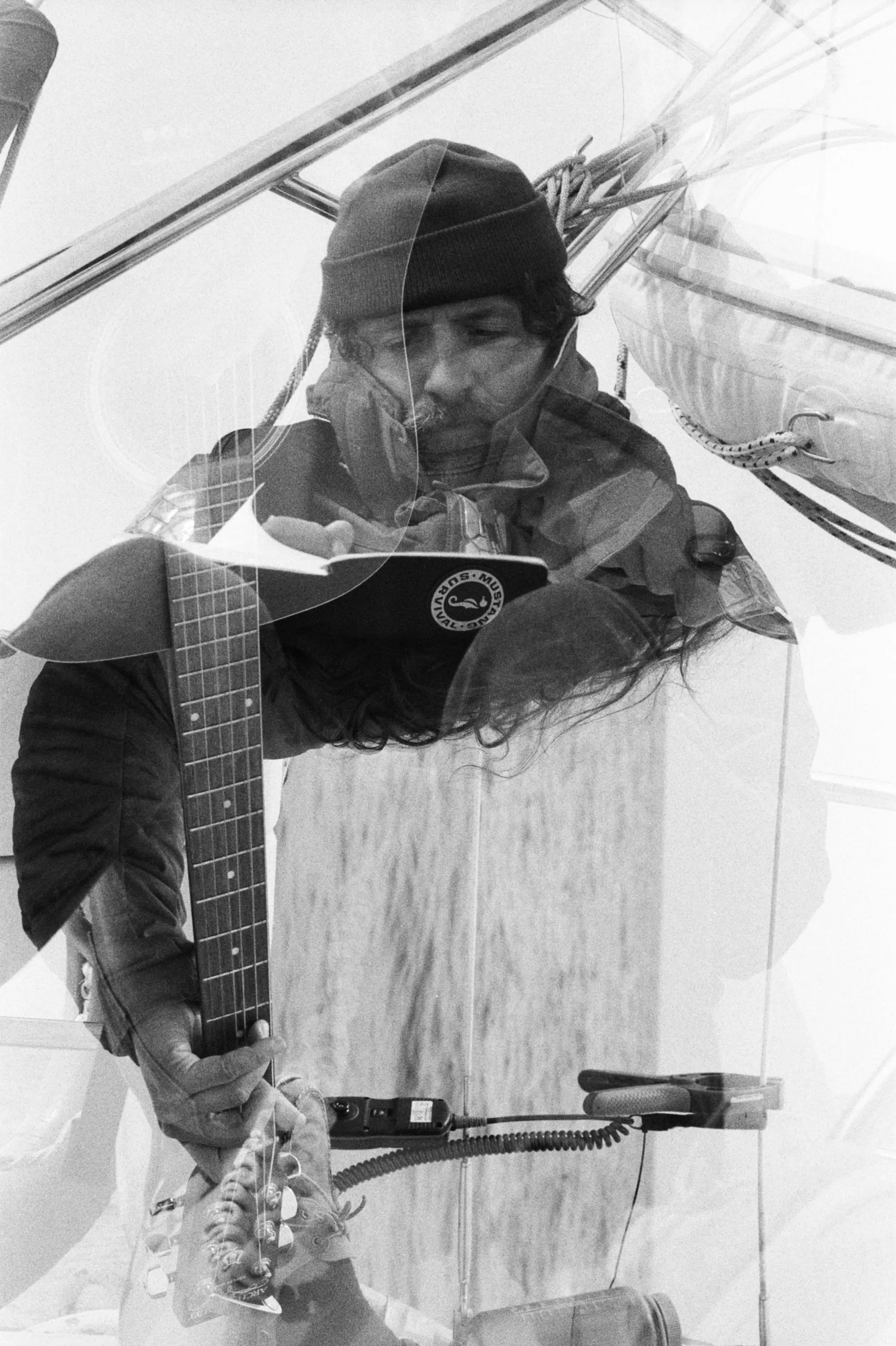

January 30, 2026
Photo
Les Macronautes
January 30, 2026
Photo
Les Macronautes
Montréal, May 2021
What is a trip when you really get down to it? A destination? A goal? The question often comes up in conversation. For us, the answer is clear: it’s a journey—sketching out an itinerary, then letting the whims of the wind redraw our course. It means setting off with an aim in mind, while secretly hoping it will elude us, lead us astray.
One evening when the pandemic still had us all pinned not just ashore but at home, we had an idea: why not take a trip to see icebergs up close? As with any madcap project, practicality matters less than momentum—the urge to set off, to get lost, to heed the wind beckoning us out to sea.
Rimouski, July 8, 2021
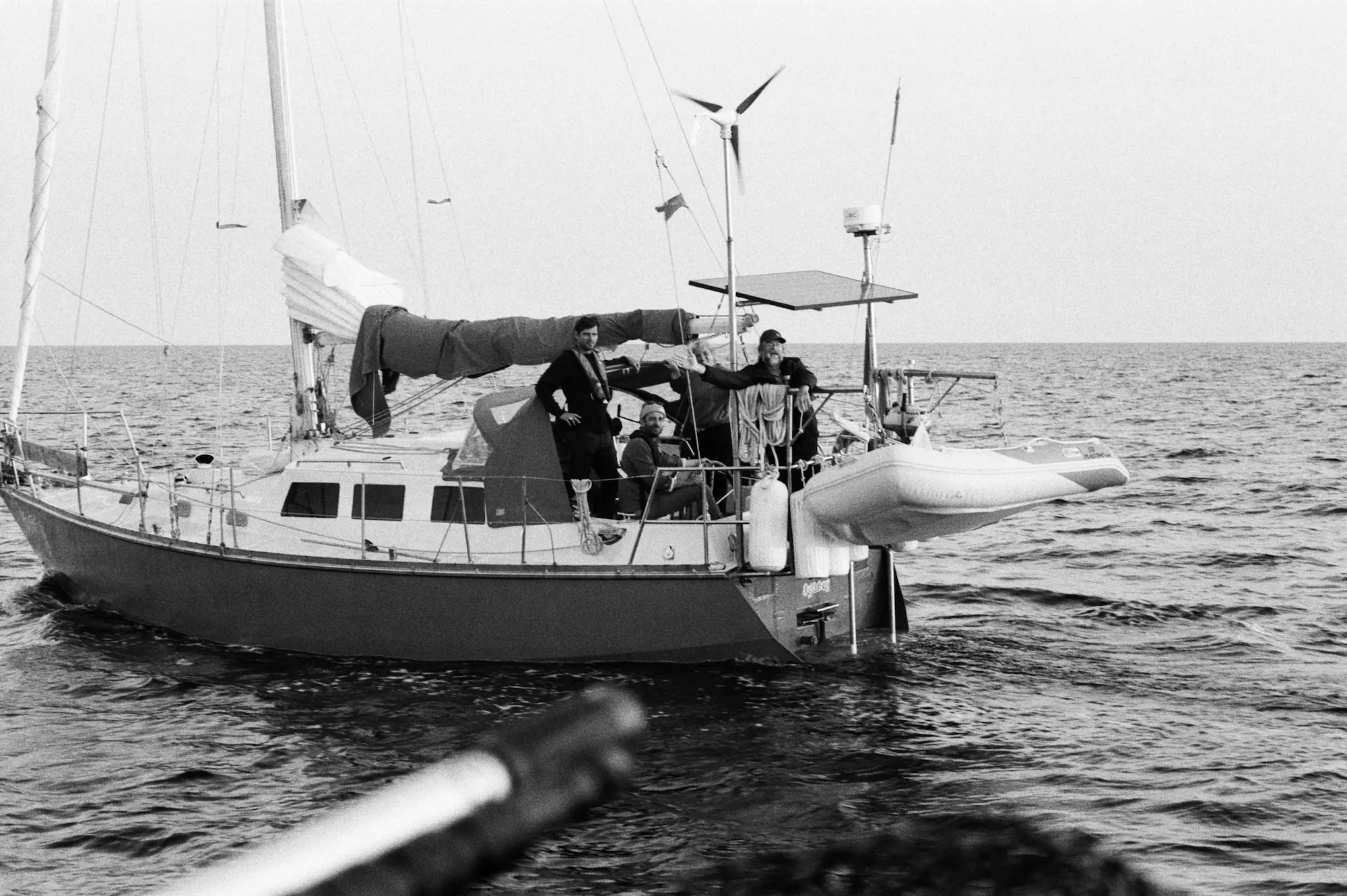
It took a couple months to turn our dream into concrete plans—today, we’re boarding the Woy Woy and the L’Apéro, bound for Labrador. The first belongs to Gilles and Adèle, whom we’ve dubbed the St. Lawrence lovebirds, the second to Pierre-Paul Arend, affectionately known as Pépé. All ten members of our expedition are driven by the same fervent hope: to glimpse the glacial giants drifting along the tail end of Iceberg Alley, which stretches from Greenland to the shores of Newfoundland, and listen to the tales they have to tell.
We cast off from the port of Rimouski in a 25-knot quartering wind. We hoist the sails, the canvas flaps with a crack, then the ropes are pulled taut. Our two steeds list, then stabilize, falling into step with the waves.
And we’re off, borne away by the wind. The sea is not a taming force—it will not subdue itself or bring others to heel. It accepts us as we are, rewilds us.
Mingan Archipelago, July 17, 2021
After sailing for 36 hours straight from Sept-Îles, the Mingan Archipelago rises out of the early morning mist. As we tack our way through the many islands, we marvel at the incredible array of marine life. Black guillemots skim the waves. Seals watch us, almost mockingly, from the rocks. Puffins, porpoises, minke whales, and jellyfish greet us as we drift by, proud denizens of another world we sense but cannot grasp. The merest ripple on the water’s surface has us rapt.
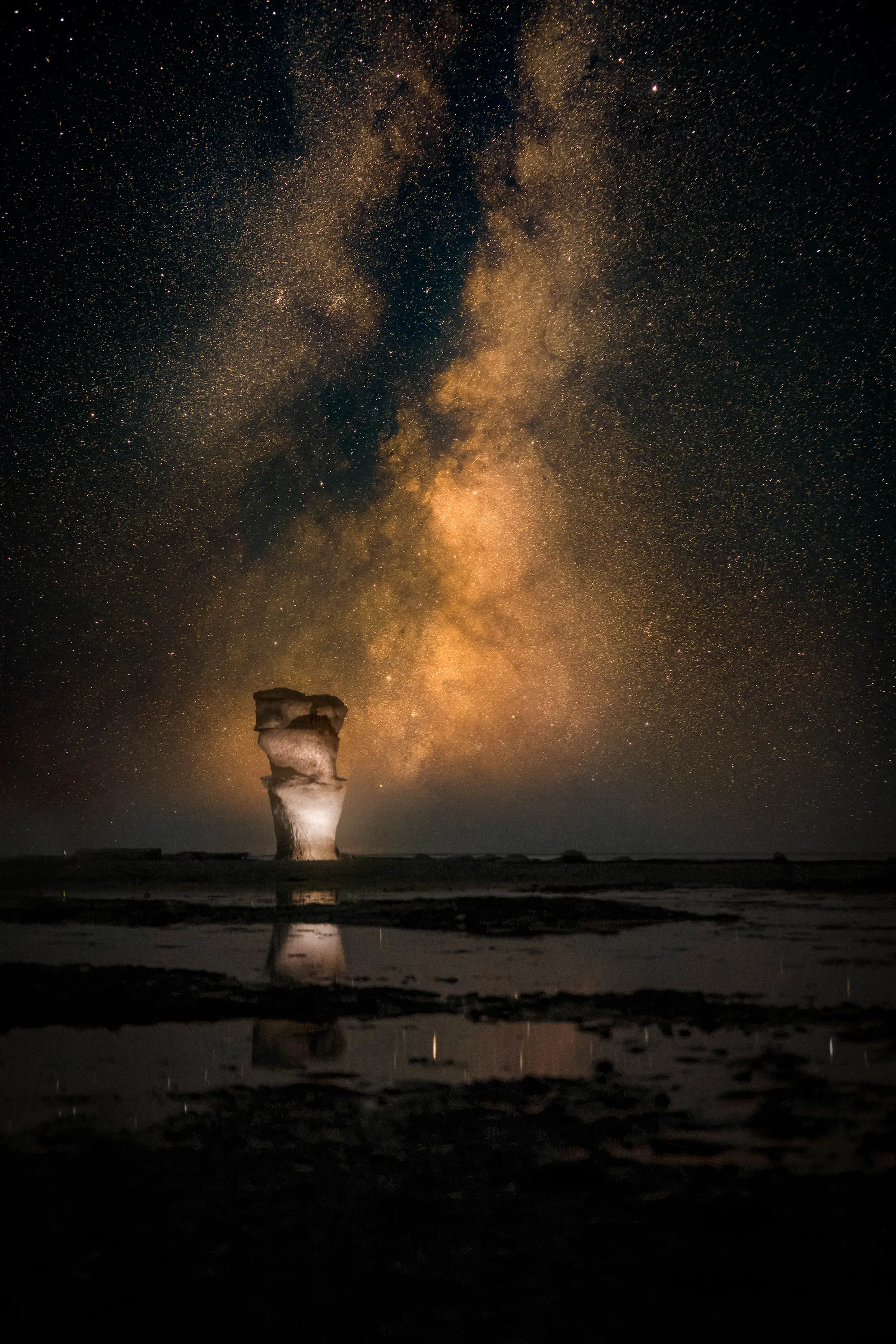
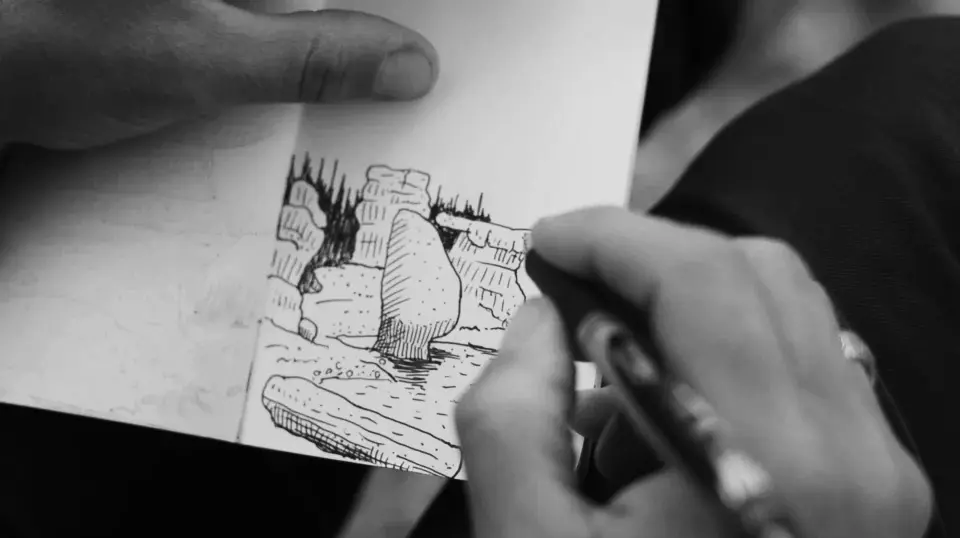
That evening, we drop anchor just off Île Quarry. The mirror-calm sea seems to have swallowed the entire sky. Backlit by the moon and the Milky Way, immense limestone formations cut sharp silhouettes: the monoliths of Mingan. Depending on your angle, they look like dragons or wolffish, petrified icebergs coming to life, as centuries of erosion pass by in the blink of an eye.
Beacons for distressed sailors, muses for artists. For us, they are giants standing watch over the St. Lawrence, age-old sages imparting an ancient truth: gusts and currents sculpt unexpected beauty and wonder.
Kegaska, July 18, 2021
This is the end of the road for Route 138, the highway that runs the length of the river’s north shore. We are on the brink of a new world, where only sailors, fishers, and lovers of the deep sea have roamed before. It marks the last familiar spot for our captains. From now on, we are all venturing into the unknown.
A sudden spray shoots up on the starboard side, followed by another near the bow. A pair of salt-water buoys launch themselves above water. For a while, the two huge humpback whales swim alongside us, heading north. It feels as if they’re showing us the way. As they dive down into the depths of the gulf, their black-and-white splotched tails slowly vanish over the horizon—a moment of grace that brings time to a standstill. Each humpback whale’s tail pattern is unique, and researchers use them to identify and track these gentle giants of the deep. Yet, we can’t help but feel the markings are dispatches from a hidden realm—one that, for all our science, humans will never understand.
Mid-river, July 20, 2021
The seafarer’s paradox: the horizon is our oyster, yet our survival rests on mere wooden planks and steel beams.
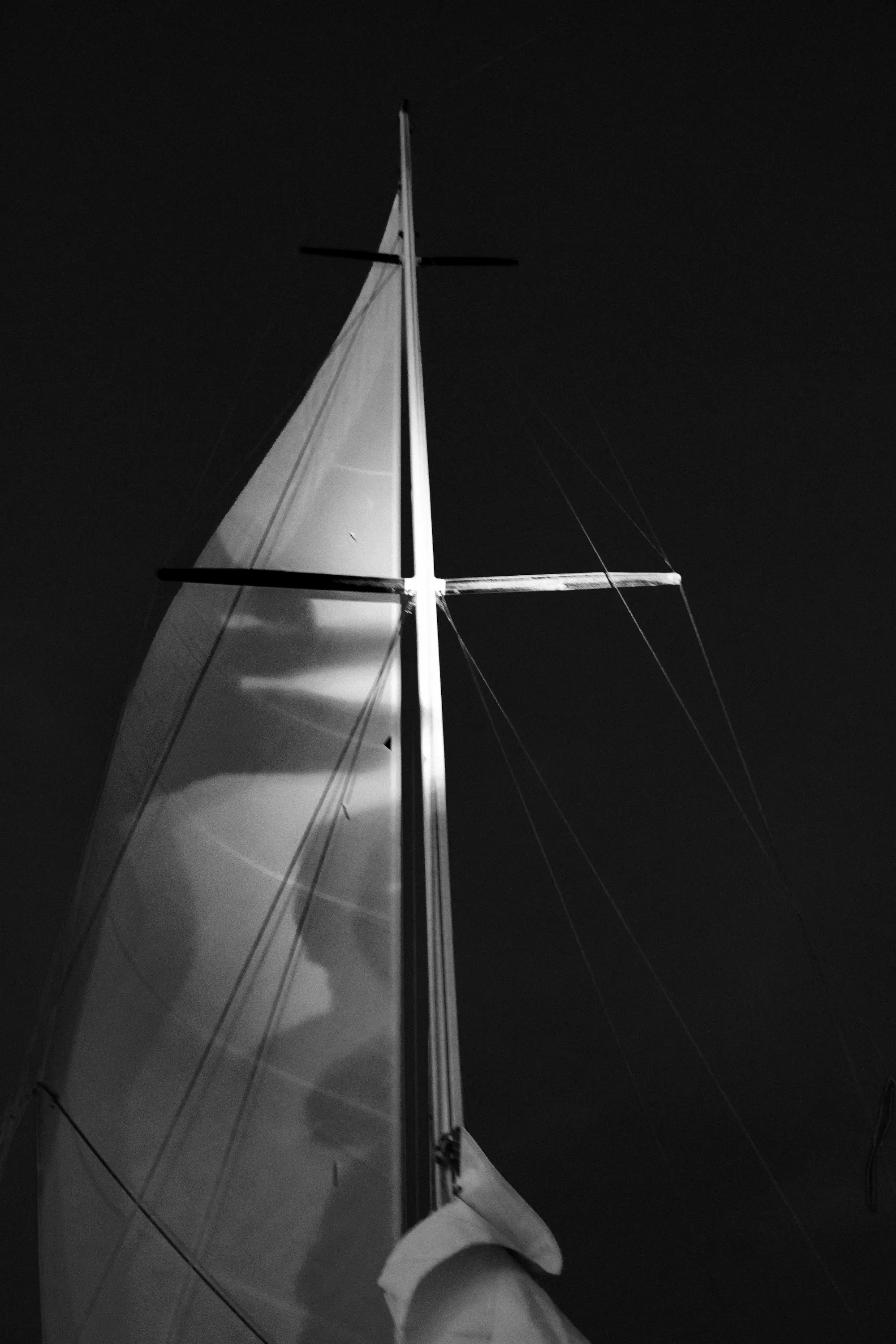
Several kilometres separate our lolling boats. To keep in touch, we shine our flashlights on our sails: the Gulf of St. Lawrence the sole witness to our twin makeshift lighthouses, gently bobbing and sparkling in the night.

Straight of Belle Isle, July 24, 2021
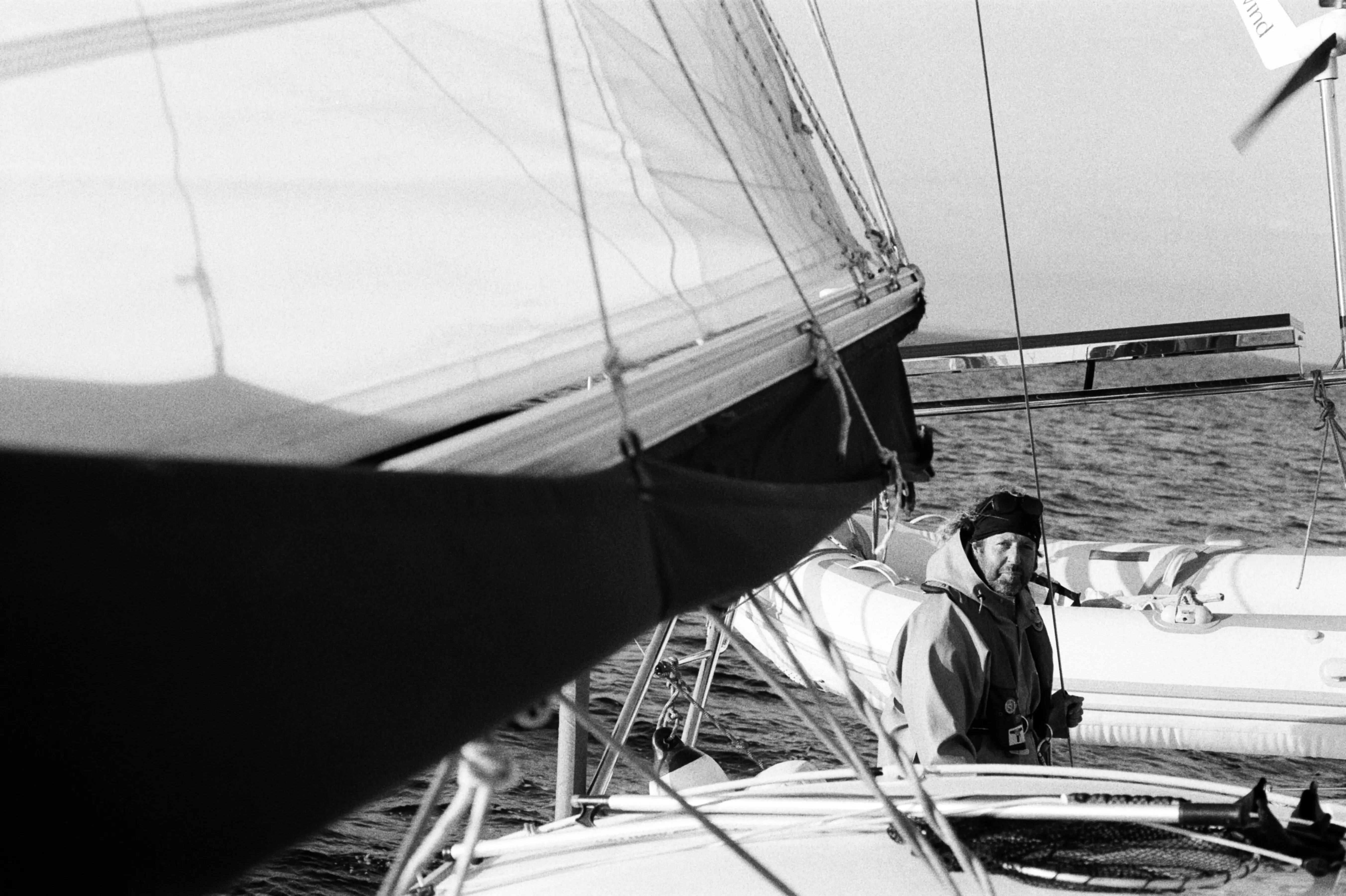
Two weeks have passed since we left Rimouski. In the distance, a thin strip of coastline cuts through the mist: Newfoundland. We have reached the Strait of Belle Isle, where the St. Lawrence meets the Labrador Sea. We pause to take in the beginning of a new phase in our adventure on the brink of a vast, sapphire expanse.
Chateau Bay, July 25, 2021
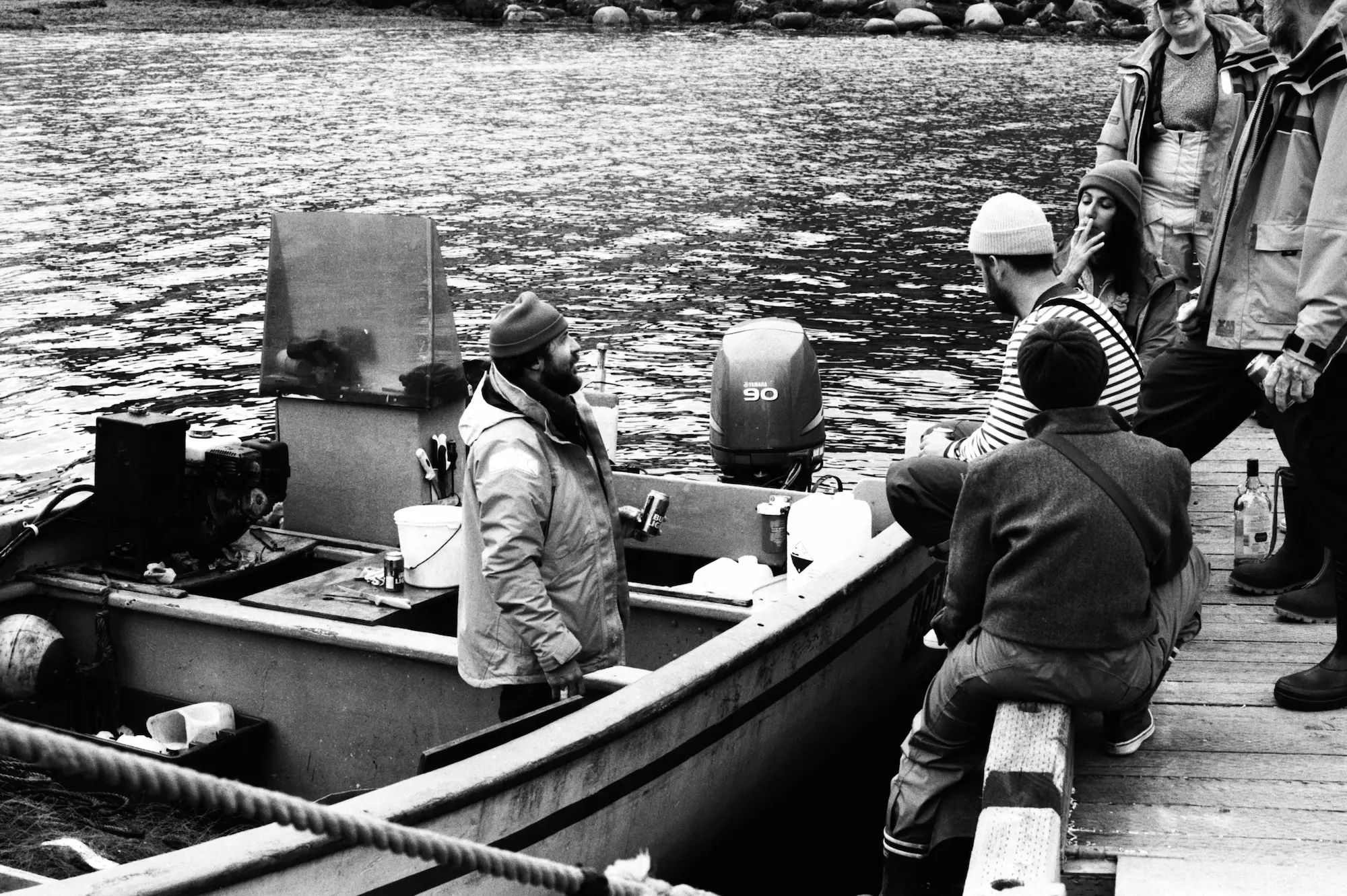
The sailboats lie at anchor in a secluded bay. Along the shore, deep footprints cut tracks in the sand. This kingdom has a ruler, and it’s a bear. We each set off in a different direction, as if irrepressibly drawn to lose ourselves in the elements.
A profound silence engulfs us, broken only by wind rustling the dogwoods. We stumble upon gravestones barely peeking out from under the vegetation—Daniel Duggan 1857, Eliza Stone 1897, Theodore LeMouin 1865. A wave of emotion washes over us. People lived, died, loved, and sang along with the wind right here, in this remote bay at the edge of the world.
As we get ready to head back to the boats, an imposing presence materializes on the crown of a nearby hill. The King of Chateau Bay is surveying us, his brown coat ruffling in the wind. From his regal height, he seems to say: so long as the sea sweeps the globe and sun warms the black spruce, Labrador will be alive.
Battle Harbour, July 26, 2021
Our last day of sailing north. Tomorrow, we’ll have to turn back. We press on toward Battle Harbour, a small outport and former cod fishing post. Peter, a local resident, welcomes us ashore. He tells us icebergs used to make regular appearances in these parts, but that they haven’t seen any for the past two years.
His story abruptly shatters our suspended disbelief before our collapsing planet. The ice is melting, along with our hopes of living in balance with nature.
This is where we stop—latitude 52°16'06 '' north. It’s time to reel in our emotions.
We have coursed over thousands of waves, buckled under gusting winds, luffed and tacked, tautened, charted winding courses—shunning straight, monotonous lines just as surely as we’ve fled certainty—only to never see a single iceberg.
And it’s just as well.
For it was these detours that gave us our most profound, and most enigmatic, encounter: the St. Lawrence River. That Giant we thought we knew, the mighty river that, in constantly drawing its breath from the ocean, is ever reinventing itself.






.webp)
.webp)


.jpg)
.png)
