


Looking for something specific? Enter keywords to discover content, stories and experiences.
Close
November 13, 2025
Photo
François Lebeau
November 13, 2025
Photo
François Lebeau
The San Francisco Bay Area gym scene has been strong for the last twenty years. New Yorkers welcomed Brooklyn Boulders almost a decade ago and they’ve since helped create communities in other cities like Boston and Chicago. One of the densest climbing populations exists in the Denver metro area, now home to the largest gym in North America. Climbing gyms are increasingly in demand in cities across Canada as well, with new spaces opening in urban centers like Vancouver, Calgary, Toronto, Montreal, and everywhere in between. Wherever there are mountains not too far away, you’ll see amateur climbing communities getting together in gyms to practice their chops.
Indoor climbing isn’t just a substitute for the real thing. It offers a sought-after mix of physical exercise, mental presence, and social interaction—right in the city. Pushing, pulling, and stretching yourself to scale a wall is a full-body workout, with an immediate and tangible sense of gratification and accomplishment. Life’s other distractions float away. One needs to be mentally in the moment and ride on the positive encouragement of your peers who are there to help you push your limits. In other words, it’s perfectly suited for the busy city-dweller in search of a social activity that is at once empowering, healthy, and convenient.

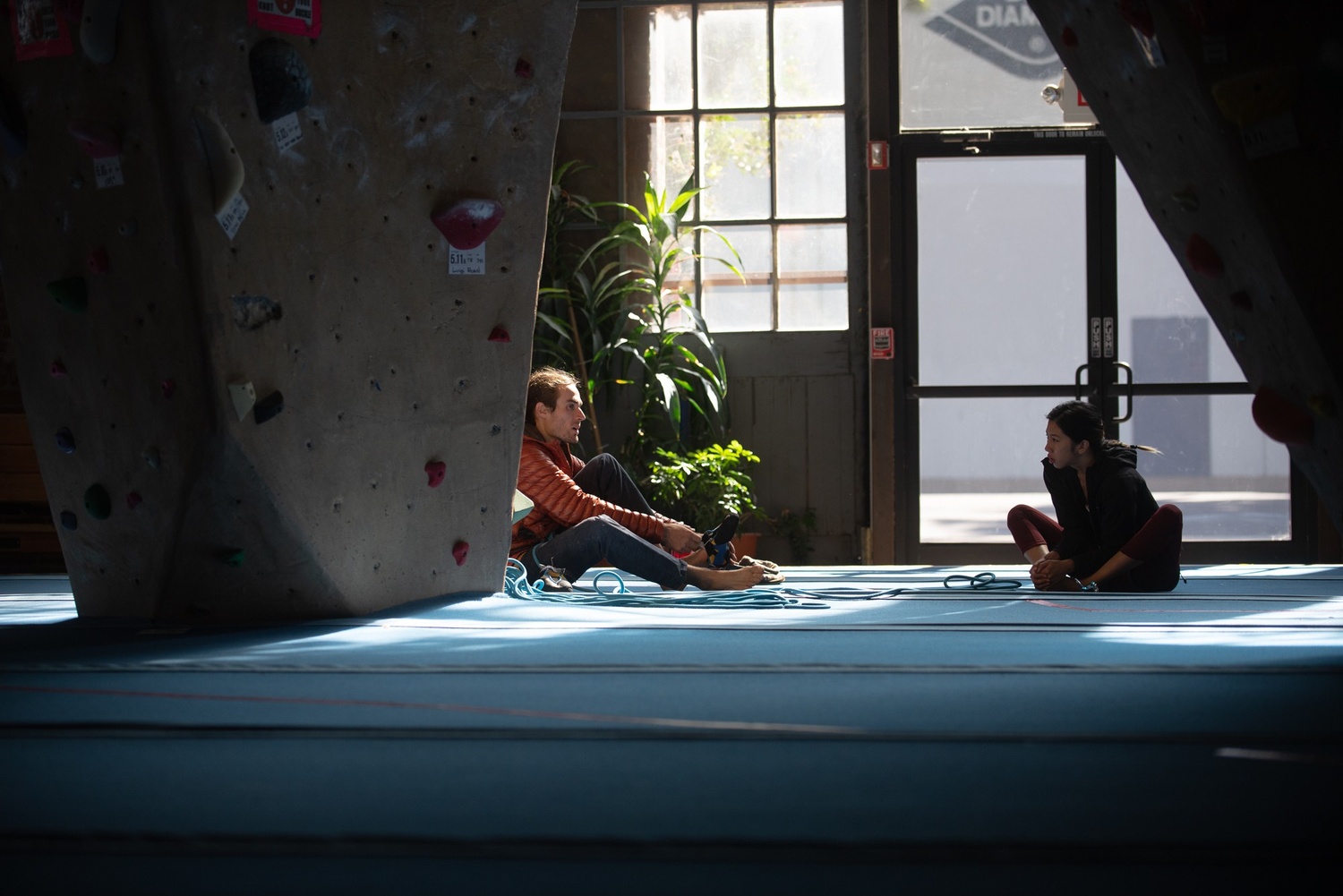
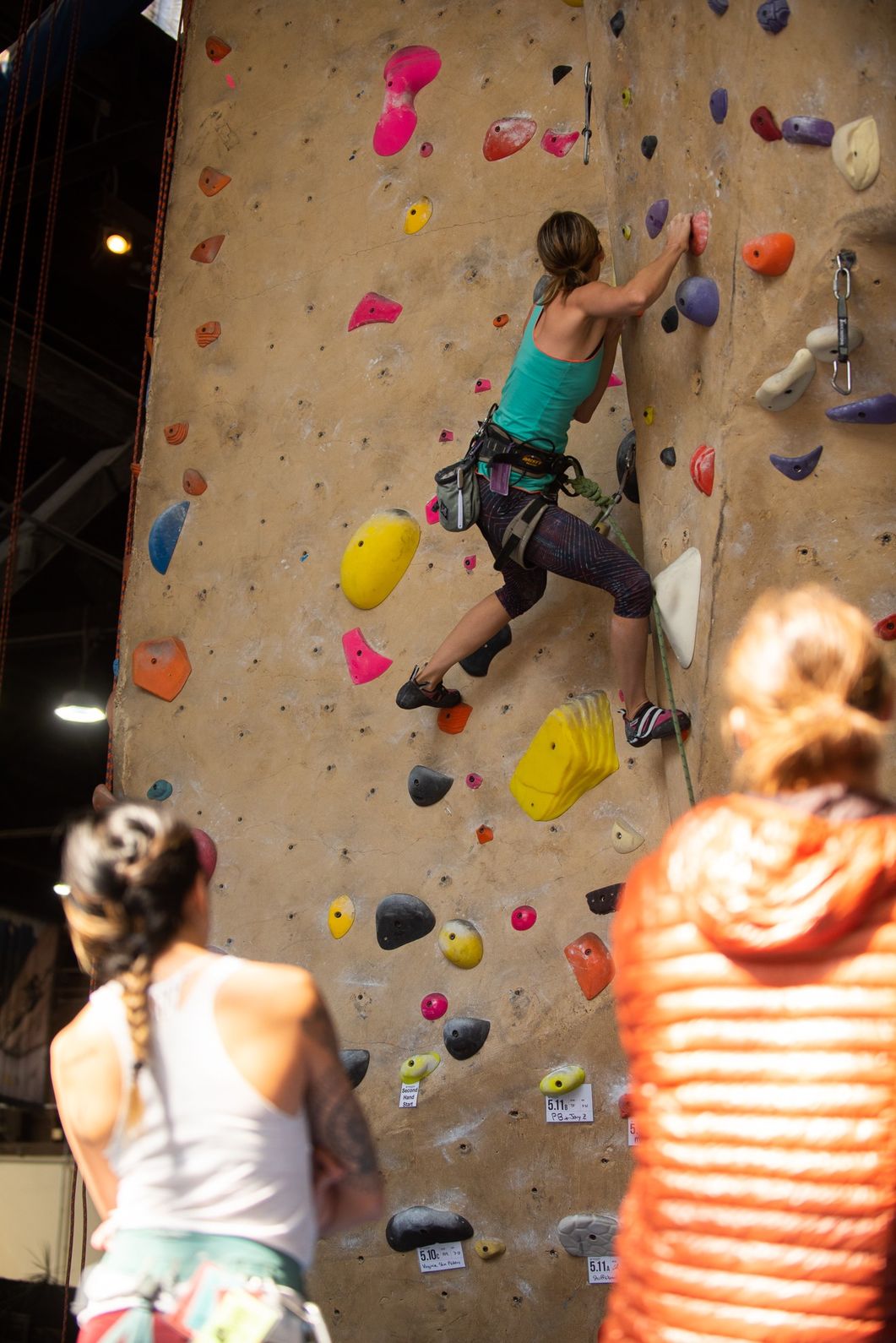
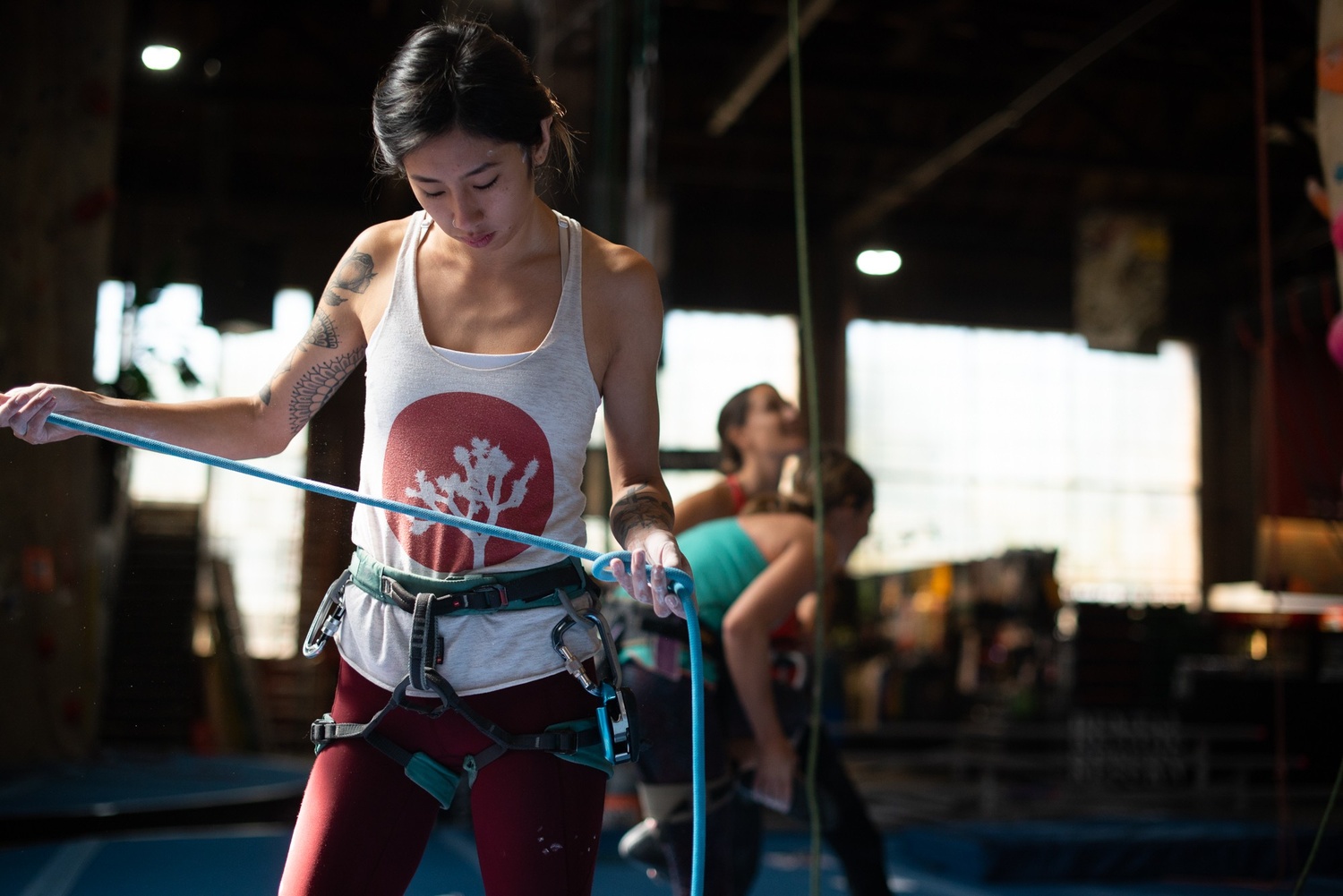
Climbing gyms offer a form of “access” to an outdoor sport that is both preparatory for the real thing, and something of its own entirely. But the gym’s best attribute is perhaps that it appeals equally to new as well as experienced climbers. Experienced climbers use the gym to maintain fitness and technique, and improve specialized skills through instruction, whereas those who are new to the gym often start out with bouldering or top-rope climbing and eventually build up the skills and confidence to consider outdoor rock climbing in and around their city.
Bouldering is the most accessible way to start gym climbing, and it can be quite social. When bouldering, a climber doesn’t need a harness or rope, since it involves free climbing and the walls are only a few metres high. The only equipment you need is a pair of climbing shoes (snug fitting with sticky rubber soles) and a chalk bag for keeping your hands dry. When you fall off the bouldering wall, you land safely on a cushioned mat. But over time you can get quite sore, so that’s why it’s always good to have a friend or two spotting you to absorb the force of your fall. For this reason, climbing gyms are great places to meet new people, as everyone recognizes the need for a spotter—and everyone can also use a bit of advice here and there.
If you want to climb higher up, even sometimes to the ceiling of the gym, check out what’s called top-roping. With this type of climbing, you’ll need a partner who will belay (manage the rope) as you climb up the wall, harnessed to the rope above you. Getting started, top-roping requires more instruction and technical technique than bouldering, but it is immediately satisfying and it only takes a day to learn the basic techniques. Slightly more advanced than top-rope climbing is lead climbing, where the lead climber trails the rope up the wall, attaching it to protection along the route. Less restrictive than top roping, lead climbing gives climbers more freedom to choose their own pathway to the top.
Originally built just for climbing, climbing gyms now promote social culture and lifestyle. With WiFi, shared work spaces, yoga, and fitness studios, and even physical therapy, daycare, and cafes popping up in the gym landscape, climbing gyms have become urban epicentres of the climbing community at large.
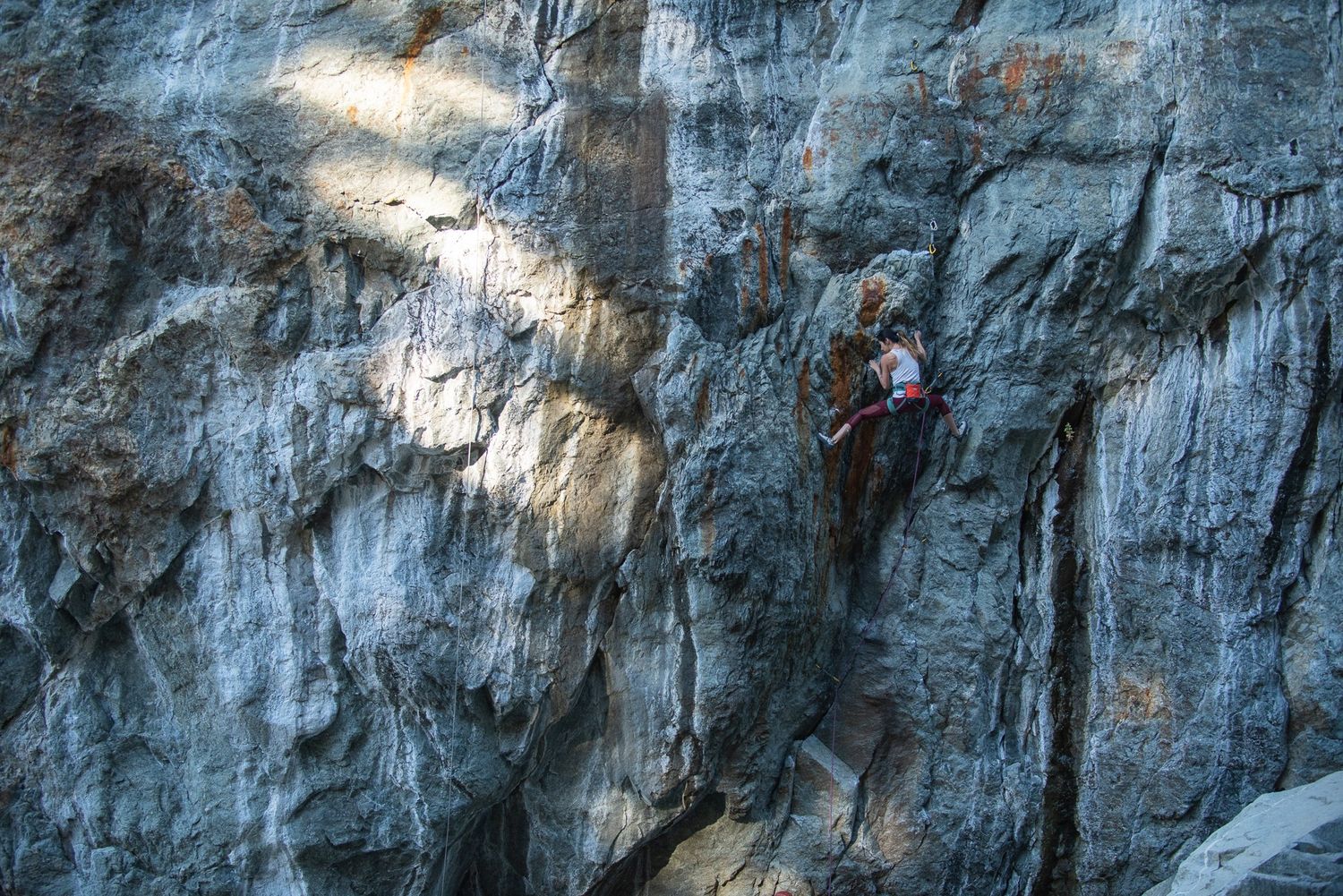
At this point you might be asking yourself, why would I ever go climbing outdoors? The answer is that nothing compares to experiencing the natural elements, gorgeous landscapes, and unique rock faces of outdoor climbing. Trading the noise of the city for the solace of nature is good for mind, body, and soul. Anyone who enjoys gym climbing will take pleasure in swapping the plastic grips of an artificial wall for the texture and challenge of the cracks and holds of a real crag.
But it’s important to be prepared for the changes that come with transitioning to this natural environment. And it is especially important to learn how to be a responsible, respectful visitor of an outdoor climbing area. Unlike the gym, natural climbing areas have no trash cans, toilets, or locker rooms. It is therefore essential to minimize one’s impact outside.
Remember you’re sharing the same outdoor area with millions of others who may be visiting to watch birds, run on trails, hike, mountain bike, backcountry ski, etc. We are guests in these natural environments, and we should never forget that climbing is a privilege, not a right.
The Access Fund, a nonprofit organization tasked with protecting climbing areas, has developed a program that promotes responsible outdoor climbing etiquette. It teaches us to be hyper-aware of our own impact on the environment and how to to leave it in better shape than when we arrived.
Adjusting to outdoor climbing may take a bit of time. You are truly out there on your own, using natural features, as opposed to following coloured holds or tape on a “designated” wall. From the smooth, polished feel of limestone to the grippy surfaces of sandstone, the variations of real rock can be disorienting at first, especially if you are coming from a gym environment in which all the holds feel similar. Be patient, push with your feet as much as possible, and don't expect to immediately climb the same grades outside as you would in the gym.
If you’re feeling overwhelmed with options, focus on looking down at your feet and staying positive about hand and foothold options. Long exhales will help keep you relaxed and focused. If it gets too tough, climb down, gather yourself, and try a new route in a few minutes!
Outdoor rock climbing has no built-in top ropes or padded flooring. You have the set up top-rope anchors yourself, and bring and position your own crash pads. If you don’t know what you’re doing, the consequences can be severe, so try to go with a more experienced climber when you’re starting out . Luckily, many gyms have, or partner with, rock-climbing guides to help gym climbers transition from gym to crag. The climbing community is always keen to share knowledge and resources with others.
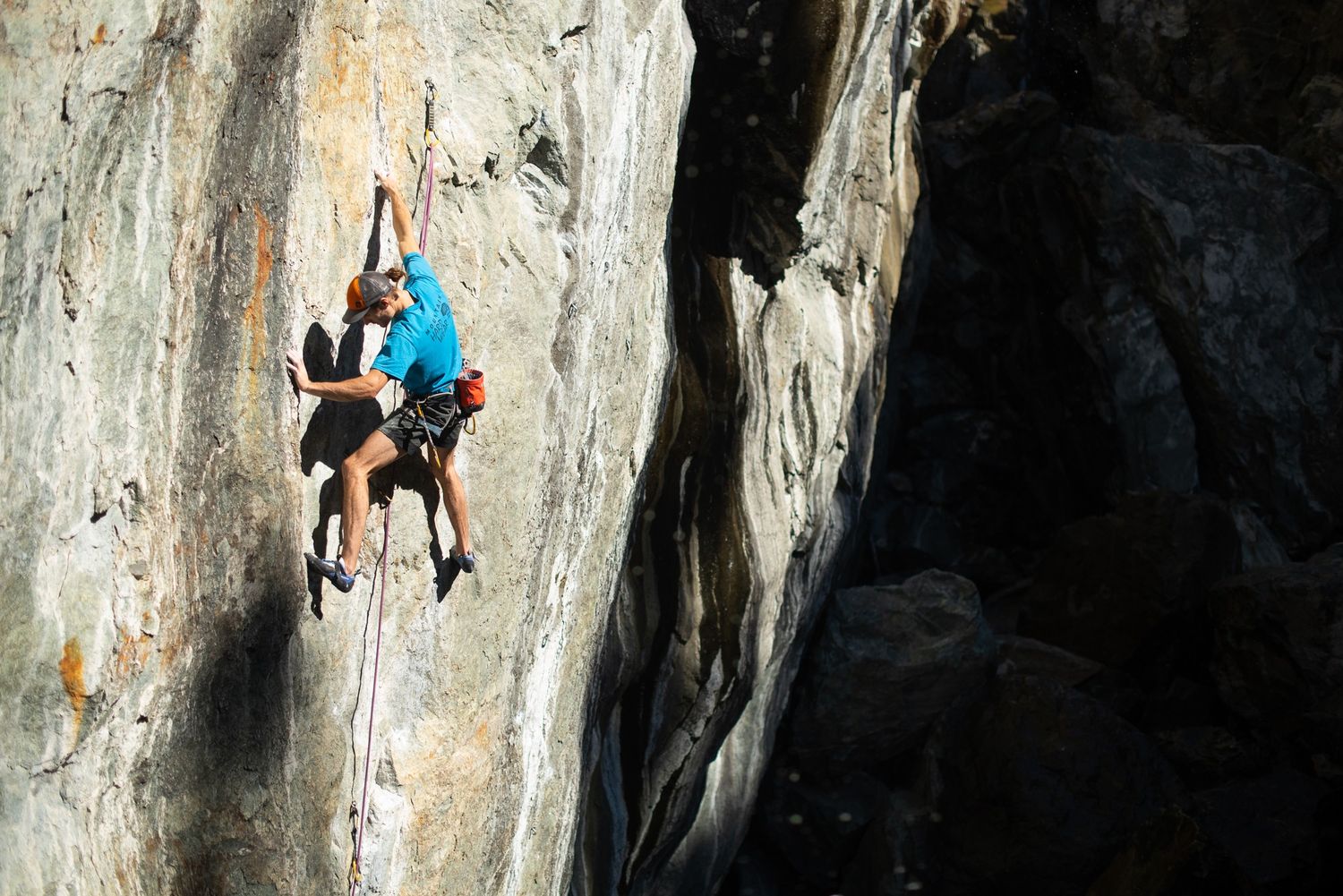
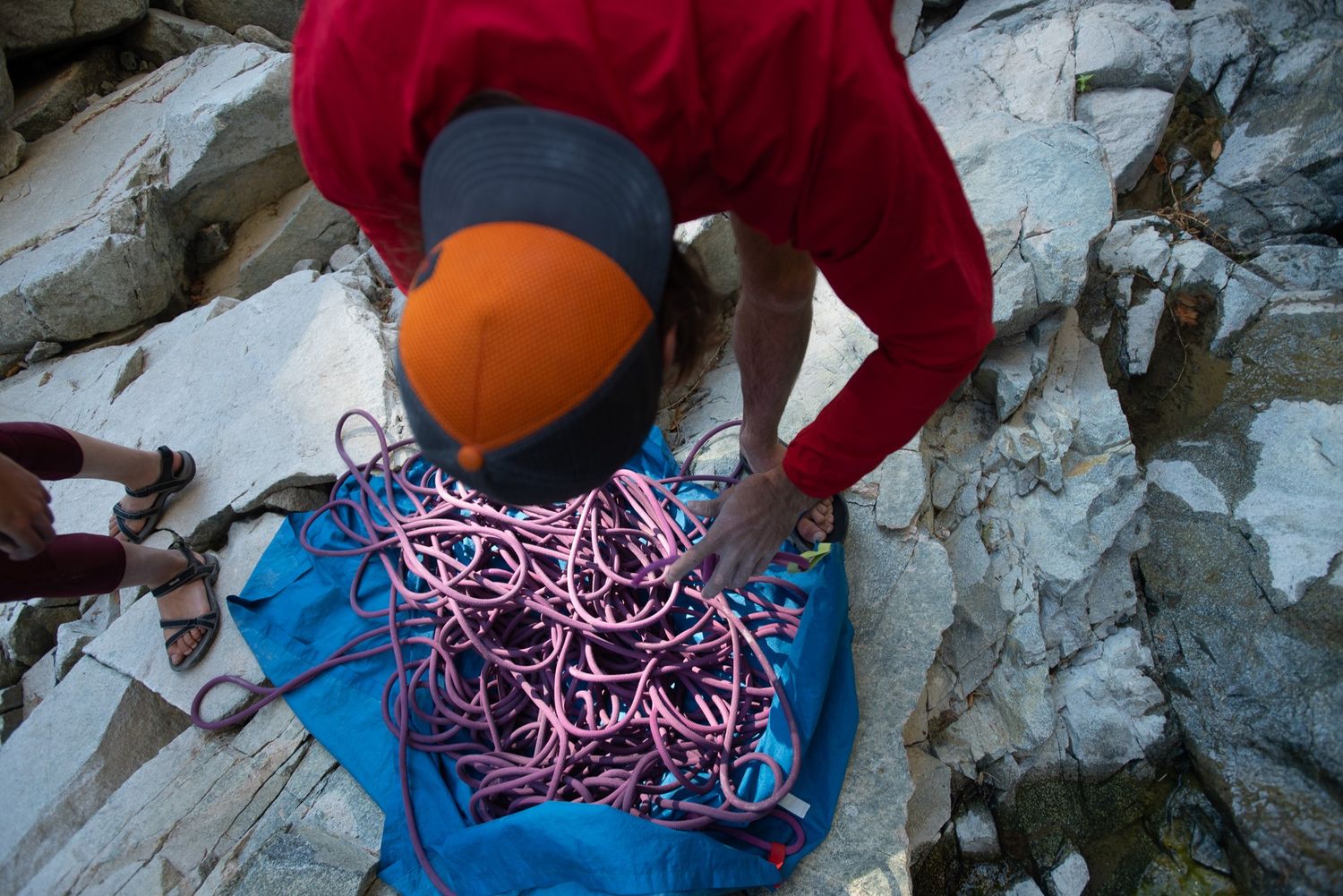
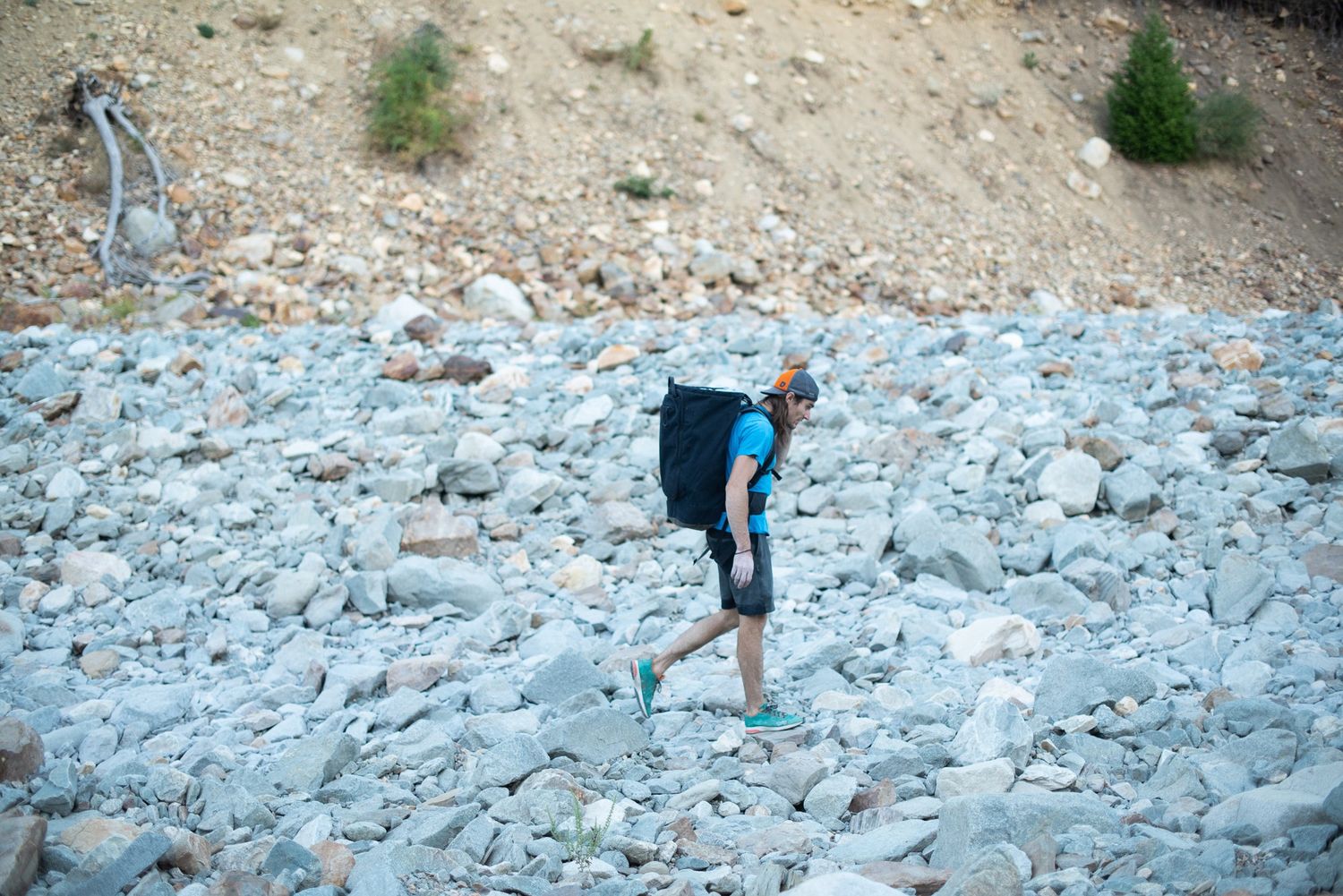
A short primer to decipher the secret language of climbers.
The person who manages the rope for a climber and keeps it from slipping in the event of a fall. They also lower they climber down on the rope.
Information or instructions for a climb. Derived from “Betamax video,” when climbers used video analysis to review their movements. “I need to figure out the beta on that crux (see below).”
Free climbing (without a rope) on boulders or traversing low to the ground. Often associated with very difficult, short bursts of climbing. Challenging for arm and finger strength.
A large foam pad used to cushion the impact of a climber’s fall.
The most difficult part, sequence, or holds on a climb or boulder problem. “That crux is really shutting me down.”
A dynamic move, like jumping from one hold to another.
A form of roped climbing in which the climber’s rope trails down to the belayer below. The climber periodically attaches the rope to pieces of protective gear fixed to the rock or wall.
To complete a route or boulder problem. “I just sent my first V4 (see below)!”
A roped climbing system in which the climber’s rope travels up to an anchor at the top of a route and back down to the belayer.
Bouldering rating scale ranging from V0 to V16. The higher the number, the more difficult the problem.
Taking a fall while lead climbing on a rope.
Rating system for climbing routes. All rope climbing routes have a prefix of 5 and the number after the decimal designates the difficulty from 1 to 15. Climbs harder than 5.10 are further classified with the letters a through d. For instance, 5.10a is easier than 5.10d.





NEW ISSUE nº17








.jpg)
.png)
