


Looking for something specific? Enter keywords to discover content, stories and experiences.
Close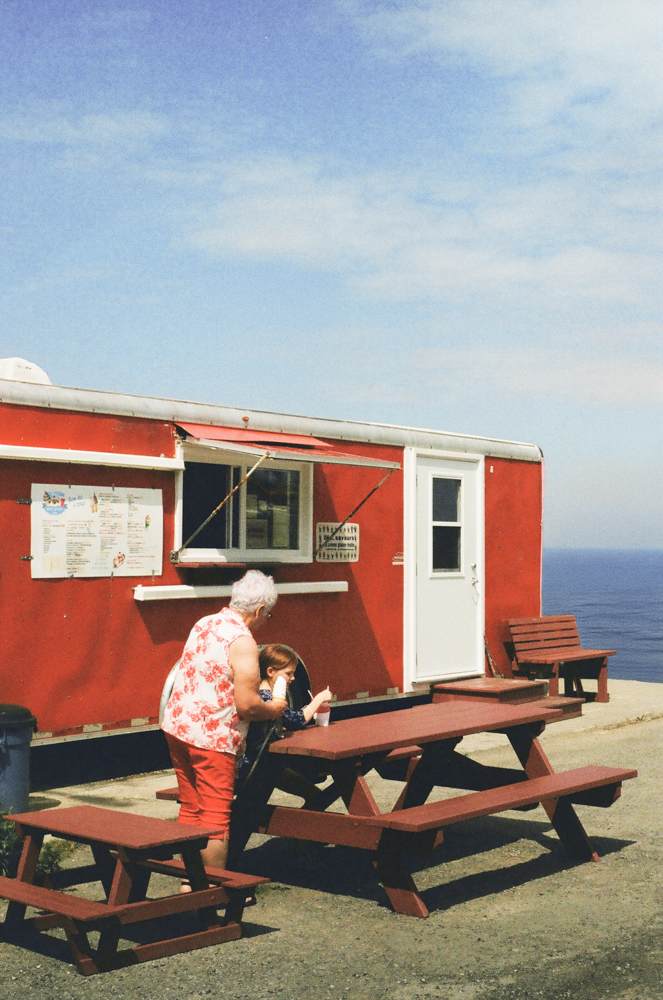
August 12, 2026
Photo
Andrée Rainville
August 12, 2026
Photo
Andrée Rainville
From his balcony overlooking the St. Lawrence River, a man rocks back and forth in his chair, reminiscing about another time: back when the trailer he had converted into a restaurant was always full. One dollar would get you a half chicken with fries and coleslaw; coffee was on the house. In the evenings, mothers would send over their children, plastic bowls in hand, to pick up fries to go with supper.
Stories like his are legion, abounding along the back roads of Québec, where greasy spoons known as casse-croutes still dot the actual and emotional landscape. Their history dates back to the 1930s, when small fast-food establishments began to spring up to feed workers during their lunch break. Variants in horse-drawn trailers followed soon after—precursors to our contemporary food trucks. By 1947, these mobile eateries would be banned in Montréal on health and sanitation grounds, though they would continue to flourish in rural areas, ultimately leading to an explosion in the popularity of potatoes outside major urban centres by the 1960s.
Named after the French expression casser la croute (to have a bite to eat; literally, “to break the bread’s crust”)—casse-croutes embody a uniquely Québécois take on American fast food. Such regional flavours gave birth to Québec’s signature dish, poutine, as well as a variety of hot dogs, subs, and other, more surprising combinations crafted from a limited selection of food items—fries, meats, buns, and an array of sauces and condiments.
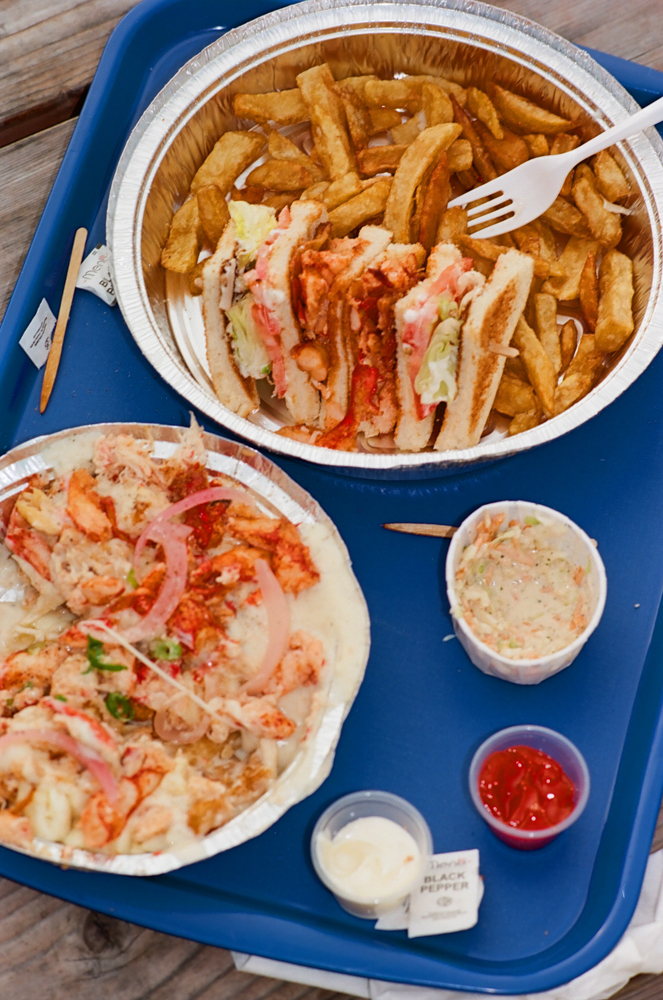
Though these roadside gems remain beloved, many are closing due to staff shortages, struggles to find successors as owners retire, and a general trend toward healthier eating. Yet they remain essential pit stops on road trips and gathering places for their communities, regardless of one’s social class or politics.
Perhaps the best way to grasp their legendary appeal is to shift the spotlight onto the people behind the counter—those who have nourished the hearts and bodies of la belle province for nearly a century.
Let’s return to the man gazing at the river from his balcony in La Pocatière. As he talks, Victorin Saucier’s eyes well with tears. Watery eyes are an affliction of old age, though they could almost lead you to believe Saucier is missing the days when he had to toil away at a series of dead-end jobs to support his family.
Almost 1,000 km away in Rouyn-Noranda, near the Ontario border, Conrad Morasse tells a no less poignant tale. “My wife, Rollande, and I already had five daughters when Serge was born,” he explains. “I was so proud to have a son that I took out a $3,000 life insurance policy on him. Within five years, we had two more children. But then I lost my job and Serge got sick. It was leukemia. Back then, there wasn’t much they could do. When he died, I bought a French fry stand with the insurance money. It let me earn a living and feed my family.”
Over in the Laurentians, Roger Morneau recalls how scarce jobs were in the Matapedia Valley when he was younger. “So I moved to Saint-Aimé-du-Lac-des-Îles to work as a lumberjack, where I was making $283 every two weeks.” Once he and his wife, Jeanine, had kids, that wasn’t enough. “I took out a $1,500 loan and bought Ben’s Shack à Patates in L’Annonciation.” Jeanine ran the fry shack during the day, and their kids would peel potatoes before heading off to school in the mornings. After work, Roger would take over at the fryer for the evening crowd. They’d stay open until the wee hours on Fridays to serve city-dwellers who’d come to spend the weekend at their cottages.
From Havre-Saint-Pierre to Témiscaming, the story of almost every casse-croute is a tale of survival rooted in a not-so-distant era of hardship and poverty. Spending your days in a hot, cramped space thick with grease is a choice you make when you have few others. Yet it was also a way to get by with dignity.
These mom-and-pop shops along rural roads are much more than a backdrop in snapshots of happy family vacations: for many, they were and are a lifeline—a place of joy born of necessity.
It’s no surprise that the cornerstone of fast-food cuisine is the humble potato—what we affectionately call a patate in Québec, in contrast with France, where potatoes are known as pommes de terre—“apples of the earth.” Native to the Andes, potatoes arrived in Québec in 1764 via Europe, after Great Britain’s Conquest of New France. They quickly became a staple of North American home cooking.
“Potatoes are easy to grow and they enrich the soil. They also keep well, which is a major advantage in a cold country where nothing grows for half the year,” explains historian Laurent Turcot. Indeed, since their introduction to Europe in the 16th century, potatoes have saved more than one population from starvation.
As for fries, they first appeared in the early 19th century. Some experts credit their invention to French street food vendors, while others insist they originated in Belgium. As the story goes, in villages where Belgians traditionally ate fried fish, they’d use potatoes as a stand-in when the rivers froze in winter.
In short, potatoes—fried or not—have long provided both nourishment and comfort.








NEW ISSUE nº17






.jpg)
.png)
